Insulation gaps can make your home less comfortable and harder to heat or cool. Even small open areas may let warmth escape, create cold spots, and make your HVAC system work longer than needed.
At Mountain View Insulation, LLC, we know that finding weak areas early can make a clear difference. By checking common problem spots, you can protect comfort and reduce wasted energy.
Complete Insulation Coverage Matters for Home Comfort
Good insulation creates a barrier between your living space and outdoor temperatures. When insulation voids appear, that barrier becomes weaker. As a result, rooms may feel uneven, drafts can develop, and heating or cooling may run more often.
Proper coverage also supports long-term home care. Our guide on why insulation matters for home comfort explains how good coverage supports energy efficiency and steadier indoor temperatures.
Common Home Areas Where Insulation Problems Often Develop
Some parts of a home are more likely to develop weak coverage. Framing, utility openings, and attic access points can create spaces where insulation is thin, shifted, or missing.
- Attics around vents, wiring, pipes, and access hatches
- Walls near windows, exterior doors, and electrical outlets
- Crawl spaces, rim joists, and basement ceiling areas
- Floors above garages or other unheated spaces
These areas can also be affected by thermal bridging inside homes, which may create cold surfaces even when insulation is present nearby.
Simple Signs That May Reveal Hidden Insulation Weaknesses
You do not always need special equipment to notice weak insulation. Your home may give simple clues during hot or cold weather. Pay attention to rooms that feel different or surfaces that feel unusually cold.
- Uneven temperatures across rooms on the same floor
- Drafts near walls, doors, ceilings, or baseboards
- Cold floors above crawl spaces or garages
- Higher heating use without a clear reason
- Visible thin spots in attic insulation
These signs can point to incomplete insulation or air leaks. A closer inspection can identify the cause.
Safe Tools for Checking Insulation Around Your Home
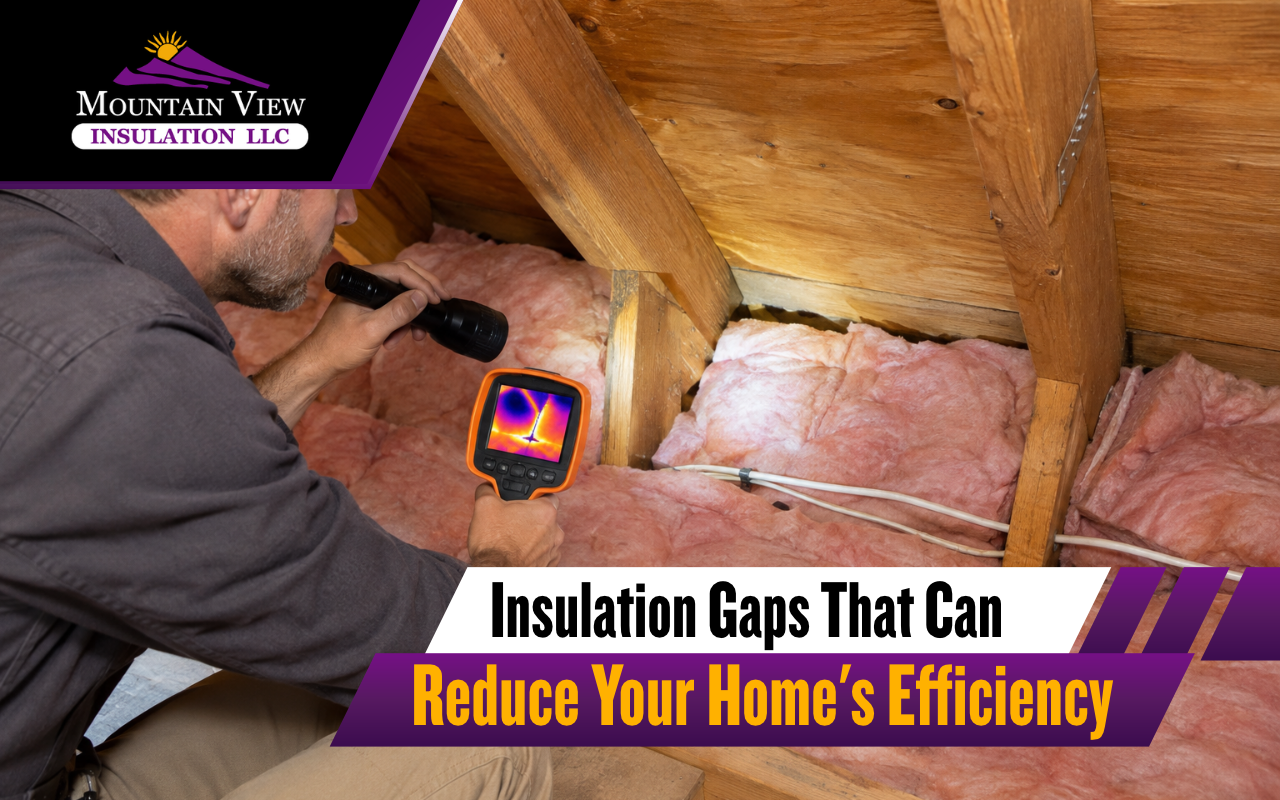
A few basic tools can make inspection easier. A flashlight helps with dark attic corners, while an infrared thermometer may show temperature changes across walls and ceilings. A thermal camera can reveal patterns linked to heat loss through insulation.
Before entering an attic or crawl space, use gloves, eye protection, a mask, and stable access equipment. At Mountain View Insulation, LLC, we recommend safety first because tight spaces may contain dust, wiring, or sharp materials.
Attic Checks That Help Expose Missing Coverage Early
The attic is one of the best places to look for insulation gaps because much of the material is visible. Check whether insulation is spread evenly and whether joists, corners, or narrow sections are uncovered.
- Review areas around plumbing and electrical openings
- Check insulation near attic hatches and access doors
- Look for compressed, wet, shifted, or missing material
- Compare insulation depth across several attic areas
For a more organized review, use our attic insulation inspection checklist to identify insulation gaps that may need attention before repairs begin.
Repair Decisions Depend on Damage and Insulation Condition
Small gaps in insulation may only need a targeted repair when the surrounding material is dry, clean, and in good shape. Sealing small openings or filling a bare area may restore coverage without replacing a larger section.
However, widespread insulation voids, moisture damage, heavy compression, or old material can require a broader solution. Our team at Mountain View Insulation, LLC, can assess the condition and explain whether repair or replacement is the better option.
Frequently Asked Questions
What usually causes insulation to develop open gaps?
Insulation can shift during repairs, settle over time, or be installed unevenly. Openings around pipes, wiring, vents, and framing can also leave uncovered areas that reduce overall performance.
Can missing insulation make one room feel colder?
Yes. Poor insulation coverage can create colder walls, floors, or ceilings in one area. That room may feel less comfortable even when the thermostat matches the rest of the home.
How can I check insulation without opening walls?
You can start with temperature checks, draft checks, and visible attic or crawl-space inspections. Thermal imaging may also show hot or cold areas that suggest hidden problems behind finished surfaces.
Does poor insulation always mean full replacement?
No. Small areas of incomplete insulation may be repaired if the existing material is still in good condition. Larger damaged sections may need replacement to restore even coverage.
When should I call an insulation professional?
Professional help is useful when insulation gaps are widespread, hard to reach, affected by moisture, or difficult to identify. An inspection can help you focus on the areas that matter most.
Professional Insulation Support for Better Long-Term Performance Results
Fixing insulation gaps can improve comfort, support steady indoor temperatures, and reduce unnecessary energy use. The best solution depends on the location, size, and condition of the existing material.
At Mountain View Insulation, LLC, we help homeowners understand the next practical step. Explore our insulation services in Tacoma or contact us for insulation support when you want clear guidance for your home.