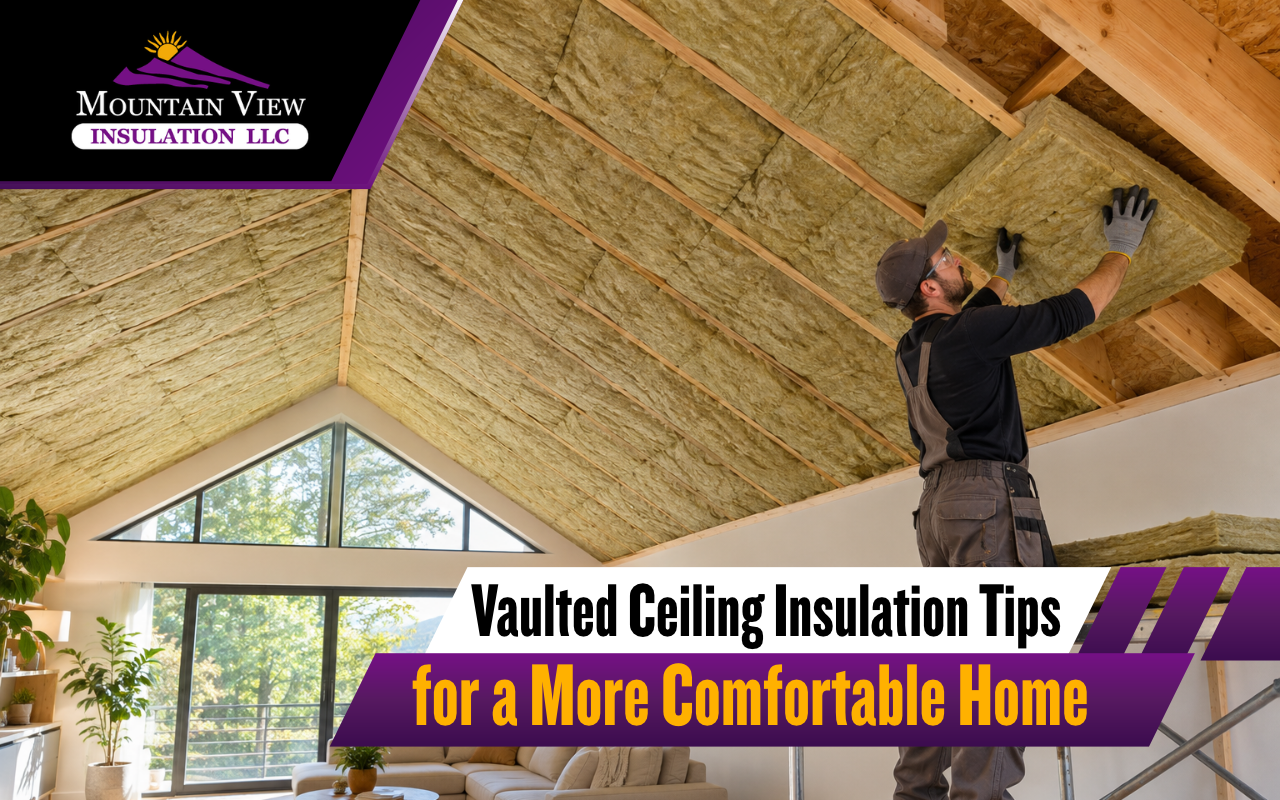
Vaulted ceilings make rooms feel open, bright, and spacious. However, they can make temperature control harder when insulation is thin, damaged, or poorly fitted. With the right vaulted ceiling insulation, you can reduce heat movement and make your home more comfortable in every season.
At Mountain View Insulation, LLC, we know high ceilings need careful planning. Good materials, air sealing, and balanced ventilation work together to protect comfort. This guide explains simple ways to improve performance, reduce drafts, and choose solutions that fit your roof design.
Why High Ceilings Need Better Thermal Protection Today
Warm air rises, so high ceilings can place extra pressure on your roof area. When heat passes through weak spots, rooms may feel colder in winter and warmer in summer. Proper vaulted ceiling insulation slows this movement and supports better ceiling thermal performance.
Cathedral ceiling insulation also helps reduce vaulted ceiling heat loss by filling key spaces near the roof. As a result, your heating and cooling system can run more evenly. Better protection may also reduce drafts and indoor temperature changes.
Check Existing Materials Before Planning Any Insulation Upgrade
Before adding new material, inspect what is already in place. Look for compressed batts, open gaps, moisture stains, or areas where insulation has moved. These signs can show where roof cavity insulation is no longer working well.
- Check for missing or damaged insulation.
- Look for air gaps around lights and wiring.
- Watch for moisture, mold, or dark roof marks.
With our team at Mountain View Insulation, LLC, you can review existing conditions clearly. For more background, read about common attic insulation materials before choosing your next step.
Compare Insulation Materials For Sloped Ceiling Spaces Carefully
Different ceiling insulation options suit different roof designs. Fiberglass batts are common, while rigid foam can add steady coverage in limited spaces. Spray foam can also help when air sealing matters or the roof cavity has unusual angles.
- Fiberglass works well in open, even cavities.
- Rigid foam adds a continuous layer across framing.
- Spray foam can seal small gaps and tight spaces.
For narrow areas, vaulted ceiling insulation must fit without large gaps. You can also review our spray foam insulation guidance to understand where this material may work well.
Balance Air Sealing With Safe Roof Ventilation Needs
Insulation alone may not solve comfort problems if warm indoor air leaks into the roof space. Seal gaps around fixtures, wall joints, and roof transitions. At the same time, some roof designs need a clear airflow path above the insulation.
Good ventilation can help control moisture and protect cathedral ceiling insulation from damage. Baffles may keep air moving from soffit vents toward the roof peak. This supports stable ceiling thermal performance and helps reduce mold or wood damage.
Reduce Heat Loss Around Rafters And Roof Framing
Wood rafters can carry heat more easily than nearby insulation. Because of this, cold lines may form along framing even when cavities are filled. Adding a continuous insulation layer can reduce these weak points and improve vaulted ceiling insulation results.
At Mountain View Insulation, LLC, our professionals look at the whole ceiling system, not only one material. See our advanced insulation methods for ideas on reducing heat movement through framing.
Choose Professional Help For Complex Ceiling Insulation Projects
Some insulation work is simple, but steep roofs, tight cavities, or moisture issues can make installation harder. A professional can check roof shape, ventilation, and insulation depth before recommending a suitable plan.
- Get help when roof access is limited.
- Use trained installers for spray foam projects.
- Ask for moisture and air leak checks.
Professional support can reduce installation gaps that lead to vaulted ceiling heat loss. To learn more about local options, visit our home insulation services page.
Frequently Asked Questions
What insulation works best for vaulted ceilings?
The best choice depends on cavity depth, roof design, ventilation, and local building needs. Fiberglass, rigid foam, and spray foam can all work when installed correctly.
Can vaulted ceilings lose more heat?
Yes. High ceilings can increase heat movement when insulation or air sealing is weak. Better coverage can reduce this problem.
Does a vaulted ceiling need ventilation?
Many designs do, especially when there is an airflow channel under the roof deck. The correct setup depends on the roof assembly.
Can spray foam improve ceiling comfort?
Yes. Spray foam can help seal gaps and improve roof cavity insulation where other materials are difficult to fit.
How often should ceiling insulation be checked?
A yearly visual check is useful. Look for moisture, sagging, gaps, pests, or other changes that may reduce performance.
Keep Your Vaulted Ceiling Comfortable Through Every Season
Good vaulted ceiling insulation can improve comfort, especially when paired with air sealing and proper ventilation. Regular checks also help you catch small problems before they affect larger parts of the roof system.
At Mountain View Insulation, LLC, you can get clear guidance based on your ceiling design and home needs. When you are ready to discuss next steps, reach our insulation team for practical support and a plan focused on lasting comfort.