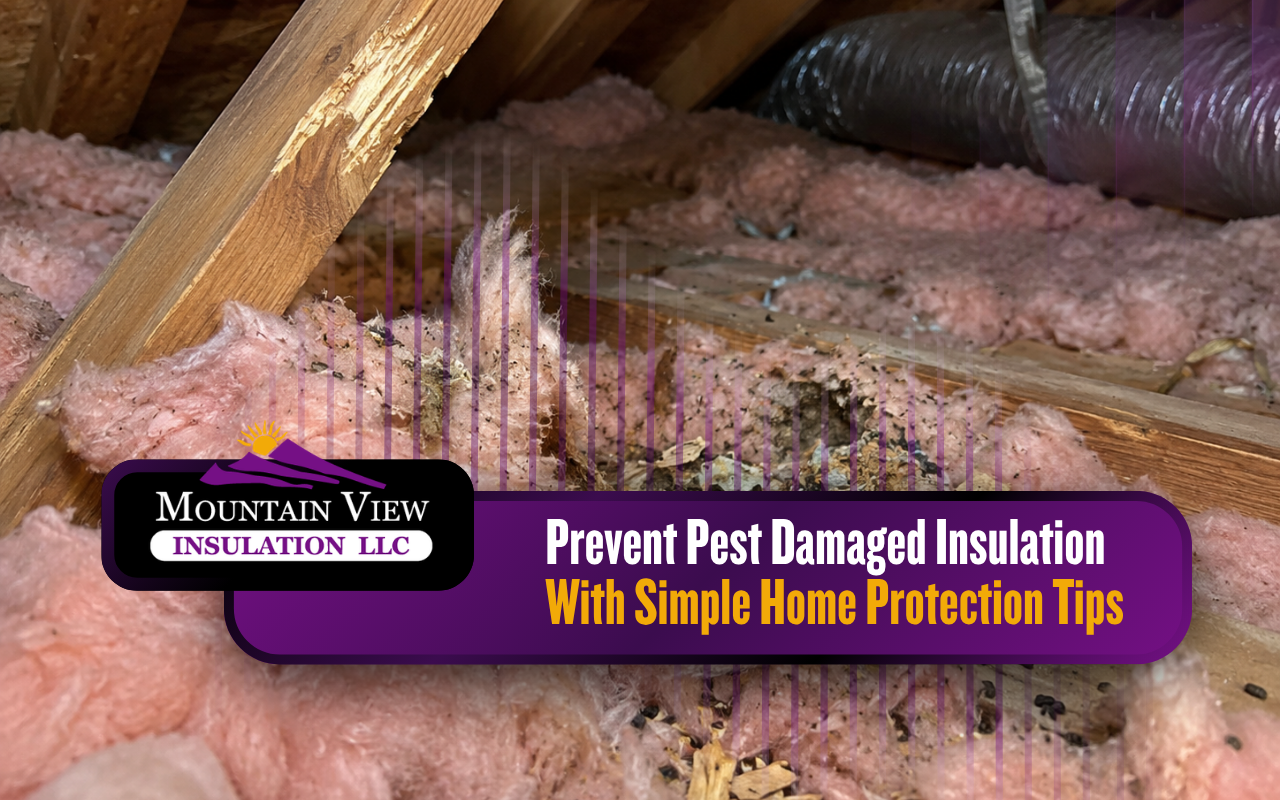
Pest damaged insulation can quietly reduce comfort, raise energy use, and create unhealthy attic conditions. Rodents, insects, and other pests may tear, nest in, or contaminate insulation before homeowners notice a clear problem.
At Mountain View Insulation, LLC, we believe prevention starts with simple habits. Regular checks, clean storage, and sealed entry points can protect your attic and help your insulation work as intended for longer.
Why Healthy Attic Insulation Matters for Home Comfort
Good insulation helps your home stay warmer in winter and cooler in summer. It also limits drafts, outside noise, and sudden temperature changes. When insulation stays dry and undisturbed, your heating and cooling system can work with less strain.
However, pest damaged insulation creates gaps and weak areas. These problems can reduce comfort and may lead to higher energy use. Our guide on when attic insulation should be replaced explains when damage may call for a larger update.
Common Pests That Can Damage Your Attic Insulation
Several animals and insects can cause attic insulation damage. Mice and rats may build nests, while squirrels can tear material apart. Insects may also disturb some types of insulation or enter through small openings around the roof.
- Mice and rats may leave droppings, urine, and nesting material.
- Squirrels and birds can tear or flatten insulation.
- Ants, termites, and wasps may create damage near wood or insulation.
Rodent damaged insulation can quickly become contaminated insulation. For that reason, early action can reduce both cleanup needs and future damage.
Early Signs Your Attic Insulation Has Pest Damage
Watch for scratching sounds, droppings, torn insulation, unusual odors, or small tracks. You may also notice wet, dark, or packed-down areas. These signs can point to pest damaged insulation or a moisture problem that attracts pests.
A simple attic insulation inspection checklist can help you review common trouble spots. At Mountain View Insulation, LLC, we recommend checking vents, corners, roof edges, and areas around pipes or wiring.
Simple Ways to Prevent Pest Damage in Attics
A clean attic gives pests fewer places to hide. Avoid storing food, birdseed, or pet supplies in open containers. Replace cardboard boxes with sealed plastic bins when possible, and remove unused paper, fabric, and clutter.
- Keep stored items organized and raised when possible.
- Remove nesting materials and food sources from the attic.
- Trim branches that give animals easy roof access.
- Check gutters and roof areas for moisture problems.
These simple steps can lower the risk of pest damaged insulation and help you notice new activity sooner.
Sealing Attic Entry Points Keeps Unwanted Pests Outside
Small openings can give rodents and insects an easy path inside. Check soffits, vents, eaves, roof edges, and gaps around pipes. Repair loose screens and close openings with materials suited to the area.
- Cover vents with secure pest-resistant mesh.
- Repair damaged weather stripping around attic access doors.
- Seal small gaps around pipes, wires, and ducts.
- Check repaired areas again during regular home maintenance.
Sealing access points helps prevent damaged attic insulation before pests can settle in. It also supports better moisture control and steadier indoor comfort.
When Damaged Attic Insulation Needs Safe Professional Replacement
Some insulation can stay in place after a minor issue is corrected. However, insulation replacement may be needed when material is heavily torn, wet, flattened, or contaminated by animal waste. Large areas of rodent damaged insulation should be handled with care.
Contamination may also affect indoor comfort and air quality. Read our guide about how old insulation can affect indoor air quality. For local service details, our Tacoma attic insulation service information explains how we approach attic needs.
Frequently Asked Questions
Can pests make attic insulation unsafe to keep?
Yes. Waste, moisture, nesting material, or heavy damage can make insulation unsuitable to leave in place. A careful inspection can show how much material is affected.
How often should I inspect my attic insulation?
Checking once or twice each year is useful. You should also inspect after roof leaks, storms, or signs of pest activity.
Does every pest problem require insulation replacement?
No. Small, limited problems may not require full replacement. The decision depends on the amount of damage, contamination, and moisture.
Can sealing gaps stop rodents from returning?
Sealing gaps can greatly reduce access, especially when combined with pest control and regular checks. Entry points should be repaired with durable materials.
What should I do after finding contaminated insulation?
Avoid disturbing the affected area. Contact qualified professionals who can assess the contamination, remove damaged material when needed, and recommend safe next steps.
Protect Your Attic With Consistent Insulation Maintenance Today
Regular care can reduce the chance of pest damaged insulation and expensive repairs. Keep the attic clean, watch for moisture, seal entry points, and respond quickly when you find signs of animals or insects.
With Mountain View Insulation, LLC, you can get clear guidance when attic damage becomes difficult to judge. If you need help reviewing your insulation, talk with us about your attic concerns and plan the next step with confidence.