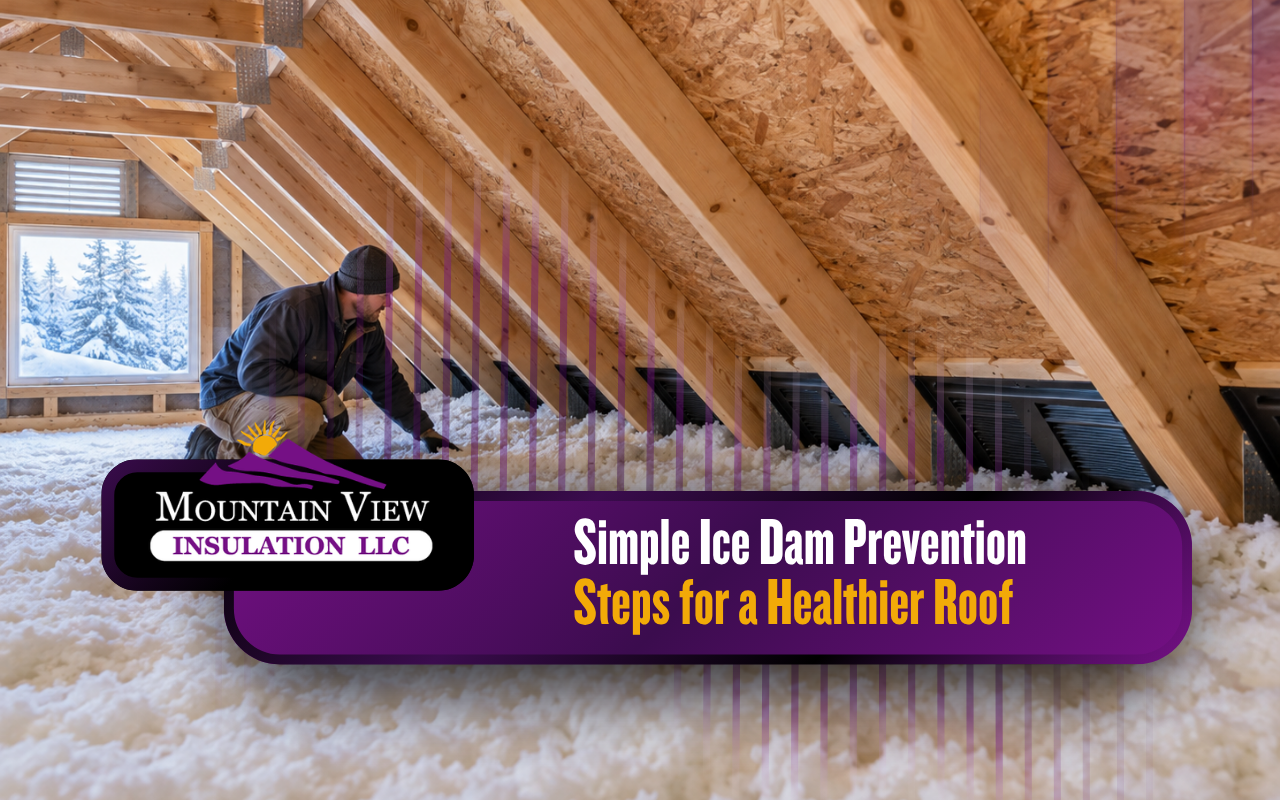
Winter roof problems often begin when warm attic air melts snow unevenly. Good ice dam prevention starts by controlling heat before water reaches cold roof edges and freezes again.
At Mountain View Insulation, LLC, we focus on the attic conditions that cause these problems. Better insulation, air sealing, and ventilation can protect your roof while keeping indoor temperatures more stable.
How Ice Dams Form During Cold Winter Weather
Ice dams form when heat escapes through the attic and warms the roof deck. Snow melts, flows downward, and then freezes again near colder eaves. Over time, this ridge can trap more water behind it.
That trapped water may move under shingles and reach ceilings or walls. Because attic heat loss and roof heat loss drive this cycle, reducing unwanted heat movement is central to ice dam prevention.
Moisture can also stain drywall, damage wood, and create conditions where mold may grow. Finding the source early is easier than dealing with repeated leaks after every freeze and thaw.
Better Attic Insulation Keeps Roof Temperatures More Even
Winter attic insulation helps keep heated indoor air below the attic. As a result, the roof surface stays colder, and snow melts more evenly. This supports ice dam insulation by reducing warm spots above living areas.
Our team at Mountain View Insulation, LLC, can also explain how insulation levels affect winter performance. Homeowners can review our guide to understanding R-value before planning upgrades.
Consistent coverage matters as much as total depth. Small empty areas can become warm spots on the roof, especially above rooms where heat naturally collects near the ceiling.
Check Your Attic Insulation Before Heavy Snow Arrives
A simple attic check can reveal weak areas before winter becomes severe. Look for thin, compressed, damp, or uneven insulation because these areas allow more heat to reach the roof.
- Check insulation depth in several attic areas.
- Look for damp or damaged material.
- Notice bare spaces near attic edges.
- Inspect areas around ducts and wiring.
For more detail, our cold-climate insulation guide explains how better coverage supports comfort and ice dam prevention.
Seal Attic Air Leaks That Let Heat Escape
Insulation works best when warm air cannot move freely into the attic. Gaps around lights, plumbing lines, attic doors, and wall openings can increase attic heat loss even when insulation looks adequate.
- Seal gaps around plumbing and wiring.
- Add weatherstripping around attic access doors.
- Close openings around ceiling fixtures.
- Check wall top plates for leaks.
Our air sealing and insulation comparison shows why both steps matter. Together, they support more reliable ice dam prevention and better indoor comfort.
Watch For Early Warning Signs Inside Your Attic
Some problems appear before ice forms outside. Frost on attic surfaces, cold rooms, drafts, and rising winter energy use can point to insulation gaps or attic air sealing needs.
At Mountain View Insulation, LLC, we look at the full attic instead of one visible symptom. This helps identify where heat is escaping and where targeted improvements may reduce future roof problems.
Also check for water stains, damp wood, or musty smells after cold weather. These signs may show that moisture has already entered areas that need attention before the next storm.
Keep Roof Ventilation Clear Through The Winter Season
Ventilation helps keep attic temperatures closer to outdoor conditions. Soffit and ridge vents can support steady airflow, but only when insulation does not block the path between them.
- Keep soffit openings free from insulation.
- Use baffles to protect airflow channels.
- Check vents for debris or damage.
- Keep storage away from vent paths.
Ventilation should support insulation, not replace it. When both systems work together, the roof is less likely to develop warm and cold zones that encourage repeated melting and freezing.
Frequently Asked Questions
What causes ice dams on a roof?
Heat escaping into the attic can warm part of the roof. Snow then melts and refreezes near colder edges, creating a ridge that blocks drainage.
Can insulation reduce ice dam problems?
Yes. Proper insulation can limit heat movement into the attic and help keep roof temperatures more even during cold weather.
Does attic air sealing matter in winter?
Yes. Small gaps can let warm indoor air enter the attic. Sealing those openings supports insulation and reduces unwanted heat movement.
Should homeowners remove ice dams themselves?
Ground-level snow removal may help in some cases, but climbing onto an icy roof is dangerous. Serious buildup should be handled with safety in mind.
When should attic insulation be inspected?
Before winter is a useful time to check coverage, moisture, and air leaks. An inspection can also help plan upgrades before heavy snow arrives.
Prepare Your Attic Before Winter Roof Problems Start
Reliable ice dam prevention depends on more than removing ice after it appears. Strong insulation, careful air sealing, clear ventilation, and regular attic checks address the conditions that cause the problem.
At Mountain View Insulation, LLC, we help homeowners review attic performance and plan practical improvements. Learn more about our attic insulation services in Tacoma or talk with our team about winter attic protection.