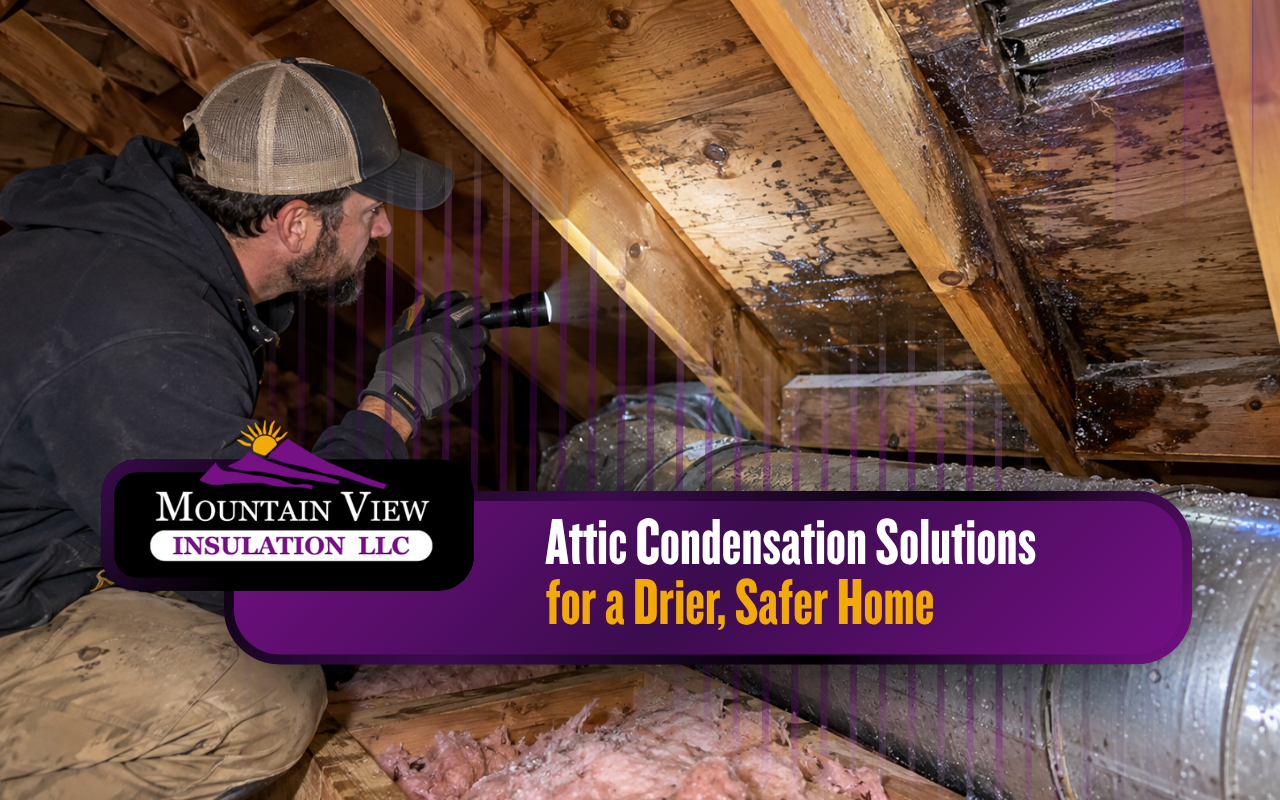
Attic condensation can appear when warm indoor air reaches cold attic surfaces. Over time, that moisture can damage insulation, wood, and roof materials. It may also make your home less comfortable and harder to heat.
At Mountain View Insulation, LLC, we focus on simple ways to keep attic spaces dry. With better airflow, sealing, insulation, and regular checks, you can reduce moisture problems before they become costly repairs.
Why Attic Moisture Can Damage Your Home Quickly
Attic moisture can weaken roof decking, rafters, and insulation when it remains for too long. Damp materials may also support mold growth, which can affect comfort and indoor air quality.
When wet attic insulation loses performance, your heating system may work harder. Because of this, early moisture control can protect your home and help keep indoor temperatures more stable.
Moisture can also spread beyond one small area. Water may move into nearby wood, fasteners, or stored items. Therefore, finding the source early is important. A dry attic supports better insulation performance and gives you a clearer view of roof or ventilation problems.
Common Causes Behind Condensation Inside Attic Spaces Today
Condensation in attic areas often starts when warm, damp air rises from living spaces. Showers, cooking, laundry, and normal daily activity can add moisture to the air.
Several conditions can make the problem worse:
- Blocked or limited attic ventilation
- Air leaks around lights and ceiling gaps
- Damaged or uneven attic insulation
- High indoor humidity during cold weather
Balanced Ventilation Helps Move Damp Air Safely Outside
Good ventilation allows outside air to enter near the eaves and warmer air to leave near the roof peak. This steady movement helps reduce attic humidity before moisture settles on cold surfaces.
Soffit and ridge vents often work well together. Baffles can also keep insulation from blocking airflow. However, vents should stay clear of dust, debris, and insulation. Seasonal checks can help confirm that air still moves through the space. For more guidance, review our attic insulation service options and see how airflow and insulation can support each other.
Air Sealing Reduces Warm Moisture From Rooms Below
Small gaps in the attic floor can let warm indoor air escape upward. Recessed lights, plumbing openings, duct chases, and attic hatches are common places where leaks can form.
Useful sealing steps include:
- Caulking small cracks around wiring
- Using foam for larger safe gaps
- Adding weather-stripping around attic hatches
- Sealing approved areas near ducts and pipes
Our guide on air sealing and insulation explains why both steps matter when moisture keeps returning.
Proper Insulation Supports Better Moisture Control All Year
Insulation slows heat movement between your home and attic. When coverage is even, it can reduce cold spots and limit the conditions that lead to attic condensation.
However, wet attic insulation should not be ignored. Moisture can lower insulation performance and keep materials damp longer. At Mountain View Insulation, LLC, we inspect insulation condition before recommending the next step.
Even coverage also matters around attic edges and hard-to-reach spaces. Missing insulation can create colder areas where moisture may collect. As a result, checking depth, condition, and coverage can support a more complete solution.
Simple Humidity Checks Can Catch Moisture Problems Early
A small humidity meter can help you track attic humidity over time. Changes are especially useful to watch during colder months, when warm indoor air meets colder roof surfaces.
You can also reduce indoor moisture by:
- Running bathroom fans during and after showers
- Using kitchen exhaust fans while cooking
- Checking dryer vents for proper outdoor discharge
- Watching for window moisture indoors
Use our attic inspection checklist to spot early signs before condensation in attic spaces causes more damage.
Frequently Asked Questions
What causes attic condensation during cold weather?
Warm, moist indoor air rises and reaches colder attic surfaces. When the air cools, water can form on wood, nails, or insulation.
Can attic condensation damage insulation over time?
Yes. Repeated moisture can reduce insulation performance and may create conditions where mold or wood damage can develop.
Does more insulation always solve moisture problems?
No. Insulation helps, but air leaks and poor ventilation may still allow attic condensation to form. A complete check is usually more effective.
How often should I inspect my attic?
Checking at least twice a year is helpful. You should also inspect after strong storms, roof work, or noticeable indoor humidity changes.
Can old insulation affect indoor air quality?
Old or damp insulation may collect dust or moisture. Read more about old insulation and indoor air quality.
Professional Support Keeps Attic Moisture Under Better Control
If moisture keeps returning, the cause may involve several areas at once. At Mountain View Insulation, LLC, we can check insulation, airflow, and visible air leaks to help identify practical next steps.
Persistent stains, soaked insulation, mold, or soft wood should be addressed quickly. For help with ongoing attic moisture, reach our team to discuss a focused moisture control plan for your home.