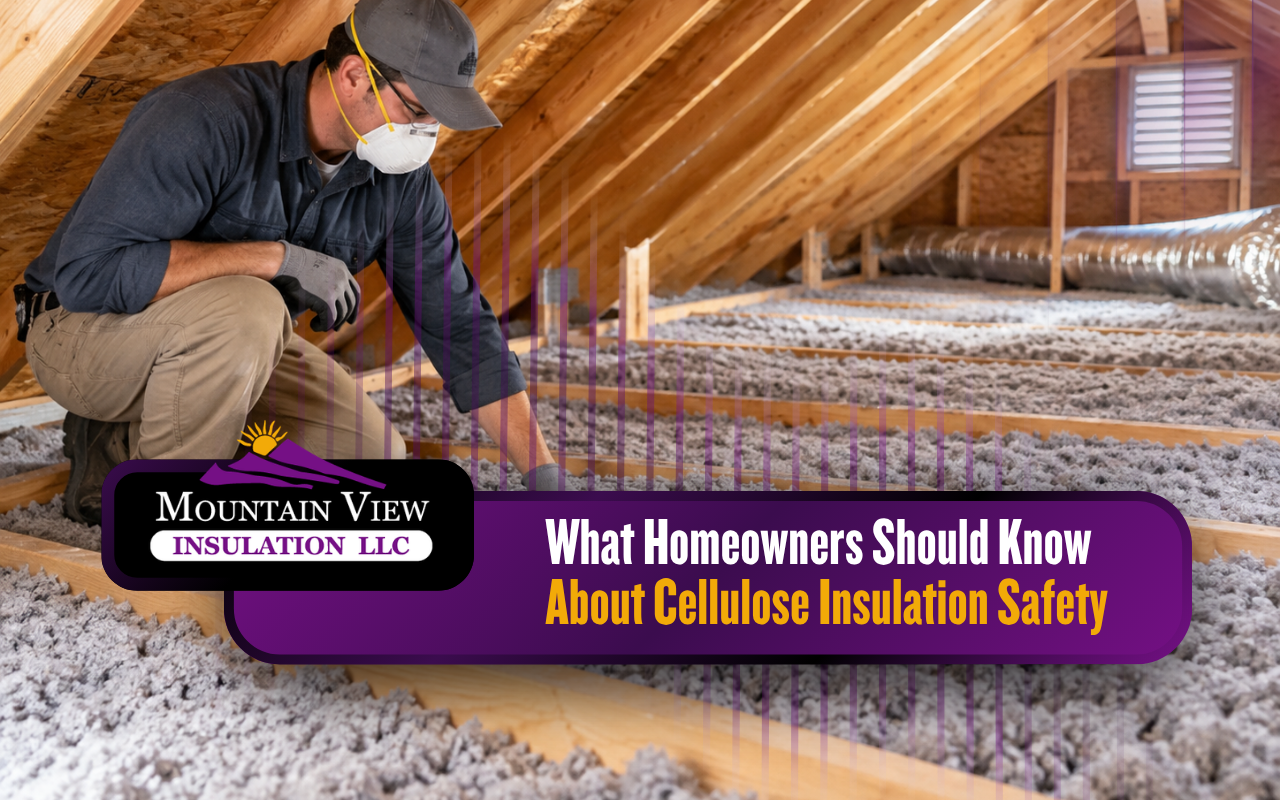
Cellulose insulation safety matters when you want a home that feels comfortable and secure. This material is made mainly from recycled paper, yet special treatment gives it useful fire-resistant qualities. It can also support indoor comfort when installed correctly.
At Mountain View Insulation, LLC, we help homeowners understand how insulation choices affect daily comfort. By reviewing fire performance, health factors, installation, and care, you can make a better choice without giving up energy savings or environmental benefits.
Why Cellulose Works Well For Safer Modern Homes
Cellulose insulation material is valued for its recycled content and low waste. It is often made from used paper that would otherwise reach landfills. Because production needs less energy than some insulation types, it can also support greener home improvement goals.
Dense cellulose fibers can also help reduce outside noise and slow heat loss. For homeowners seeking safe home insulation, these benefits make cellulose a practical option for comfort, efficiency, and less environmental impact.
- Uses a high level of recycled paper.
- Helps reduce sound between rooms and outside.
- Supports steady indoor temperatures through the year.
What Cellulose Contains And Why Proper Treatment Matters
Most cellulose insulation starts with finely shredded recycled paper. Manufacturers add mineral-based ingredients to improve performance. This cellulose treatment often includes borate compounds that help the material resist fire, pests, and mold during normal use.
Because the basic mix is simple, cellulose can work well in attics, walls, and other spaces. Our team at Mountain View Insulation, LLC, also explains how proper product choice and installation can support cellulose insulation health and indoor comfort.
Fire Performance Adds Another Layer Of Home Protection
Although cellulose comes from paper, its fire performance differs from untreated paper. Fire-retardant additives and dense installation help reduce how quickly flames can spread. This cellulose fire resistance is one reason homeowners consider the material for residential insulation.
Cellulose insulation safety also depends on correct placement around heat sources, wiring, and fixtures. When installed to current requirements, treated cellulose can char instead of burning quickly. Read our reasons homeowners choose cellulose insulation for more context.
Health Factors To Consider Before Cellulose Installation Begins
Homeowners often ask about dust, indoor air, and irritation. During installation, loose fibers can create dust, so masks, eyewear, and careful handling are important. After installation, the material usually stays in place when the area remains dry and undisturbed.
For people comparing options, cellulose insulation health can be part of the decision. It is also useful to review how cellulose compares with fiberglass before choosing for your home.
- Use protective gear during installation.
- Keep the insulation dry after placement.
- Address leaks before they affect insulated areas.
Good Installation Supports Safety And Reliable, Lasting Results
Correct installation is essential for cellulose insulation safety because uneven coverage can reduce comfort and performance. Air leaks should be sealed first, and the material should be installed at the right depth and density.
At Mountain View Insulation, LLC, we focus on even coverage and careful placement. Homeowners can also review our practical cellulose insulation tips to see how preparation and installation habits support reliable results.
- Seal open gaps before adding insulation.
- Use proper equipment for even distribution.
- Check coverage after installation is complete.
Maintenance Helps Cellulose Perform Well For Many Years
Cellulose can remain effective for many years when moisture is controlled. Regular checks in attics and other insulated spaces can help you catch roof leaks, plumbing problems, or condensation early.
Cellulose insulation safety also benefits from keeping the correct depth. If settling happens, adding more material may restore coverage. Our cellulose insulation service information explains where this material can work effectively in local homes.
Frequently Asked Questions
Is Cellulose Insulation Safe Around The Home?
Yes, when properly treated and installed, cellulose is widely used as safe home insulation. Correct spacing around heat-producing fixtures and good moisture control are important for safe performance.
Does Cellulose Burn Easily Like Normal Paper?
No. Cellulose treatment adds fire-retardant materials that improve cellulose fire resistance and slow flame spread compared with untreated paper.
Can Cellulose Insulation Affect Indoor Air Quality?
Installation can create temporary dust, but settled material normally stays in place. Good ventilation, dry conditions, and proper installation help support better cellulose insulation health over time.
How Long Can Cellulose Insulation Usually Last?
It can last for decades when it stays dry and keeps proper coverage. Occasional checks can show whether settling or moisture needs attention.
Should Homeowners Install Cellulose Without Professional Help?
Some projects may look simple, but professional equipment and correct density matter. Skilled installation can help improve coverage, comfort, and fire performance.
Choose A Safer Path For Lasting Home Comfort
Choosing insulation means balancing safety, comfort, efficiency, and long-term value. Cellulose insulation safety becomes easier to understand when you consider treatment, fire performance, installation needs, and simple maintenance together.
When you are ready to discuss your home, our team at Mountain View Insulation, LLC, can explain practical next steps. Visit our contact page to discuss your insulation needs and learn what may work best for your space.