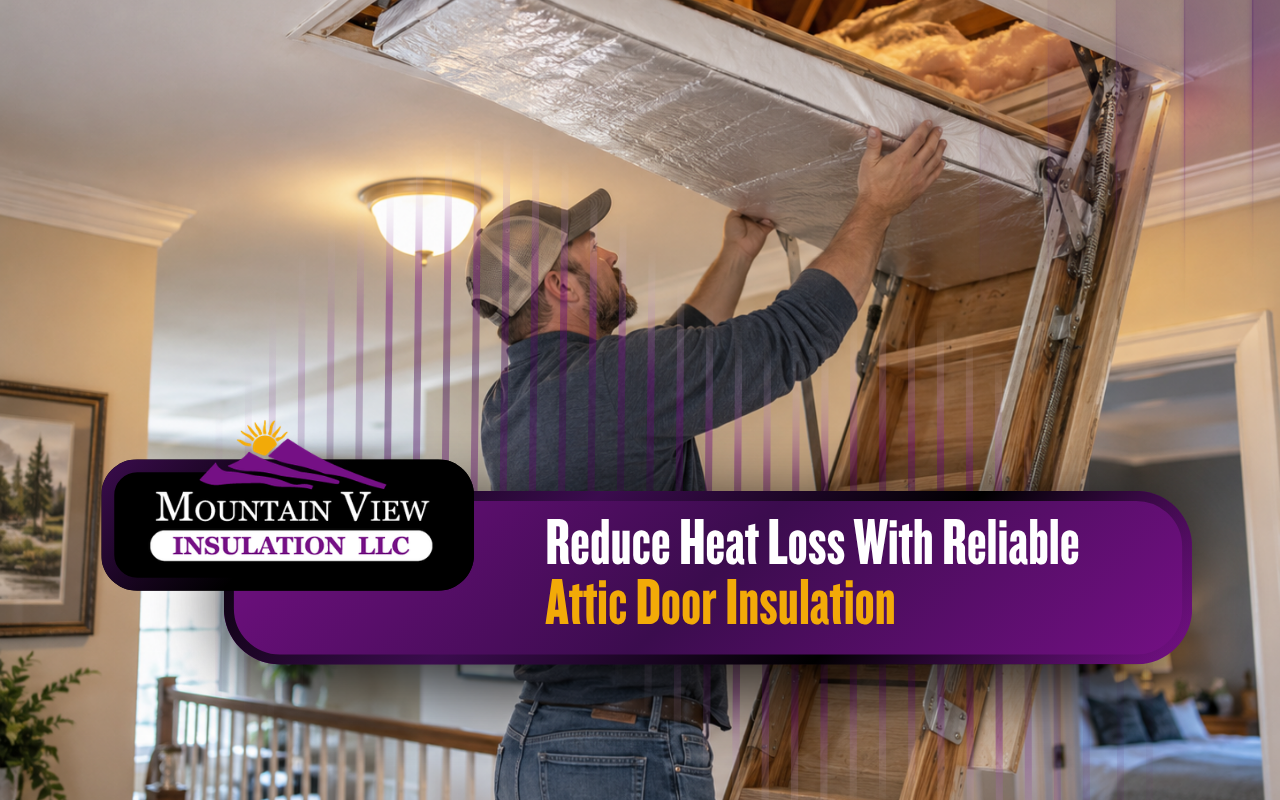
Attic door insulation can make a clear difference in how comfortable your home feels through every season. A small attic opening may let warm or cool air escape, which can create drafts and make indoor temperatures harder to control.
At Mountain View Insulation, LLC, we look at attic openings as part of the home’s full comfort system. With simple sealing and insulation steps, you can reduce wasted energy, limit drafts, and help your heating and cooling equipment work more efficiently.
Attic Openings Affect Comfort And Energy Use
Heat naturally moves between warm and cool areas. When an attic opening has weak seals, indoor air can move through gaps around the hatch. This attic heat loss may leave upper rooms less comfortable and make your system run longer.
Good attic access insulation creates a stronger barrier between your living space and attic. For a wider look at this issue, read our guide to attic air sealing and insulation.
Common Signs Your Attic Hatch Needs Attention
Some problems are easy to notice, while others build slowly. Attic door air leaks can cause uneven temperatures, extra dust, or higher energy use. A quick inspection around the hatch can reveal several warning signs.
- Drafts near the attic opening
- Worn or missing weatherstripping
- Condensation around the hatch
- Rooms that feel too hot or cold
- Visible gaps around the attic access cover
If these signs appear, attic door insulation may help restore a tighter barrier and improve comfort across nearby rooms.
Simple Materials That Create A Stronger Barrier
Several materials can support attic hatch insulation. Rigid foam board adds thermal protection to the hatch itself, while weatherstripping helps close small gaps around the frame. Caulk may also seal narrow cracks where air can pass.
- Rigid foam board for the hatch
- Weatherstripping for door edges
- Caulk for small frame gaps
- Foil tape for sealed panel seams
- A fitted attic access cover
Our team at Mountain View Insulation, LLC, can also help homeowners choose practical materials that fit the attic opening and the home’s needs.
Prepare The Attic Door Before Adding Insulation
Good preparation helps new materials fit well and last longer. Start by removing dust, loose insulation, and old seal material from the hatch area. Then check the frame for cracks, damage, or uneven edges that may affect the seal.
Measure the opening carefully before cutting any material. Accurate sizing supports better attic door insulation and helps avoid gaps. You can also review our practical attic insulation tips for more ways to prepare the space.
Install Insulation Carefully For Better Lasting Results
Attach rigid foam to the attic hatch so it sits flat and secure. Seal panel seams with suitable tape, then add weatherstripping around the frame. The hatch should close firmly without needing extra force.
- Clean and measure the hatch.
- Cut insulation to the correct size.
- Secure the material to the door.
- Seal gaps around the frame.
- Test the hatch for a snug fit.
For larger gaps or hard-to-reach areas, professional attic door insulation may provide a cleaner and more complete result.
Seasonal Checks Keep Attic Seals Working Properly
Weatherstripping and seal materials can wear down over time. Check the attic opening during seasonal home maintenance, especially before very hot or cold months. Replace loose strips and reseal cracks when you notice air movement.
At Mountain View Insulation, LLC, we also recommend looking beyond the hatch when comfort problems continue. Our attic insulation service information explains how the wider attic area can affect indoor comfort.
Frequently Asked Questions
How does an attic door lose heat?
Small gaps around the hatch let indoor air move into the attic. Adding a tight seal and proper insulation can reduce this unwanted air movement.
What works best for attic hatch insulation?
Rigid foam, weatherstripping, caulk, and fitted covers are common choices. The best option depends on the hatch style, size, and existing condition.
Can an attic access cover reduce drafts?
Yes. A fitted cover can add another barrier above the hatch and help reduce air movement when it seals well around the opening.
How often should attic seals be checked?
Check them at least once or twice each year. Seasonal inspections make it easier to spot worn seals before they create larger comfort problems.
Does attic insulation help lower energy use?
It can. Better sealing and insulation reduce unwanted heat movement, which may help heating and cooling systems maintain indoor temperatures with less effort.
Create A More Comfortable And Efficient Home
Improving attic door insulation is a focused upgrade that can support steadier temperatures and reduce wasted energy. A well-sealed hatch also helps limit drafts, dust movement, and unwanted heat transfer between your home and attic.
With Mountain View Insulation, LLC, you can get clear guidance based on your home’s needs. You can also read our home energy efficiency guide or get in touch with us to discuss the right next step.