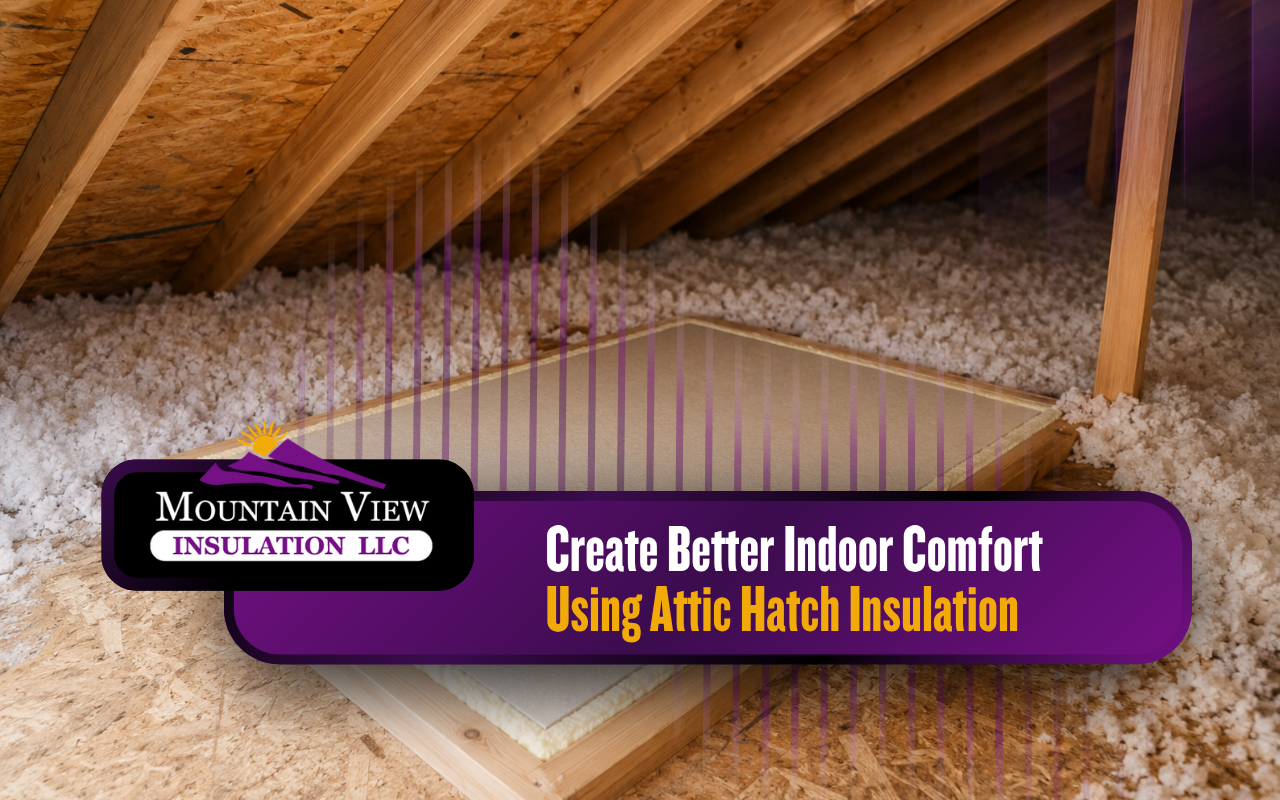
Attic hatch insulation can make a clear difference in how comfortable your home feels. A poorly sealed opening lets heated or cooled air escape, so your system works harder. At Mountain View Insulation, LLC, we help homeowners close this hidden gap and protect indoor comfort in every season.
Because the attic opening sits between living space and an unconditioned area, even small gaps can waste energy. A better seal reduces drafts, supports steady temperatures, and helps your home use less energy without a major renovation.
Why Attic Openings Cause Hidden Energy Loss Indoors
Warm air naturally rises, which makes the attic hatch one of the easiest escape routes in winter. During summer, attic heat can move down through the same opening. These attic heat loss points can create uneven rooms, ceiling drafts, and extra pressure on heating and cooling equipment.
For a broader look at these weak areas, read our guide to attic air sealing and insulation differences. It explains why sealing gaps and adding insulation often work best together.
Common Signs Your Attic Hatch Needs Attention Today
Many homes show clear warning signs before energy use rises. You may notice cold air below the hatch, a hot ceiling area in summer, or dust collecting around the frame. These signs often point to attic hatch air leaks or weak attic door insulation.
- Drafts near the attic opening
- Visible light around the hatch frame
- Uneven temperatures between nearby rooms
- Compressed or missing insulation above the door
Choosing Materials That Match Your Home Needs Best
The right material depends on the hatch design, available space, and moisture conditions. Rigid foam board gives strong coverage without much thickness. Fiberglass can work well when it stays dry and supported. Weatherstripping is also important because insulation alone cannot stop moving air.
Our team at Mountain View Insulation, LLC, can review the opening and explain which option fits your home. For more guidance, visit our attic insulation selection guide.
Simple Steps For Better Attic Access Insulation Results
A careful installation starts with clean surfaces and accurate measurements. The hatch must still open safely, and the added material should not block hinges or pull-down stairs. Good attic access insulation combines a fitted panel with a continuous seal around the frame.
- Measure the hatch and frame carefully.
- Remove damaged or loose material.
- Attach a fitted insulation panel securely.
- Add weatherstripping around every edge.
- Test the hatch for a tight closure.
Professional Service Prevents Gaps And Costly Mistakes Today
Good attic hatch insulation may be simple, while some openings include folding stairs, uneven frames, or limited clearance. In these cases, professional work can prevent loose panels, blocked hardware, and missed gaps. We also check nearby areas that may be reducing the value of insulation for attic opening.
At Mountain View Insulation, LLC, we focus on safe access, complete sealing, and lasting results. Our Tacoma attic insulation services can address the hatch along with the larger attic system.
Maintenance Keeps Seals Working Reliably Through Every Season
Attic hatch insulation needs occasional checks because seals can flatten, shift, or crack over time. Inspect the frame before winter and summer. Look for loose weatherstripping, moisture, damaged foam, or insulation that no longer sits flat against the hatch.
- Replace brittle or compressed seals.
- Keep the hatch surface clean and dry.
- Secure loose panels before they shift.
- Check for new gaps after attic work.
These small steps protect comfort and help prevent attic hatch air leaks from returning.
Frequently Asked Questions
How much insulation should cover the attic hatch?
The right amount depends on the space available and the insulation used nearby. The goal is a secure layer that does not block the hatch, stairs, or hardware.
Can weatherstripping solve the whole problem alone?
Weatherstripping helps stop moving air, but it does not slow heat transfer through a thin hatch. Most homes need both a tight seal and an insulated panel.
Is attic door insulation safe for pull-down stairs?
Yes, when the system is designed for safe movement and proper clearance. A fitted cover or insulated box may work better than material attached directly to folding stairs.
How often should the hatch seal be checked?
Check it at least twice each year and after any attic work. A quick inspection can reveal loose seals, gaps, moisture, or damage before comfort problems return.
Does attic hatch insulation reduce heating system use?
It can help by keeping conditioned air inside the living space. The result may be steadier temperatures and less frequent heating or cooling, especially when other attic leaks are sealed.
Build A More Comfortable And Efficient Home Today
Attic hatch insulation is a small project with benefits. It supports stable room temperatures, reduces drafts, and strengthens the rest of your attic insulation. For more practical ideas, review our attic improvement tips for local homes.
When you are ready to reduce hidden heat loss, contact us through our contact page for attic support. We can inspect the opening, explain the best next step, and help create a more comfortable home.