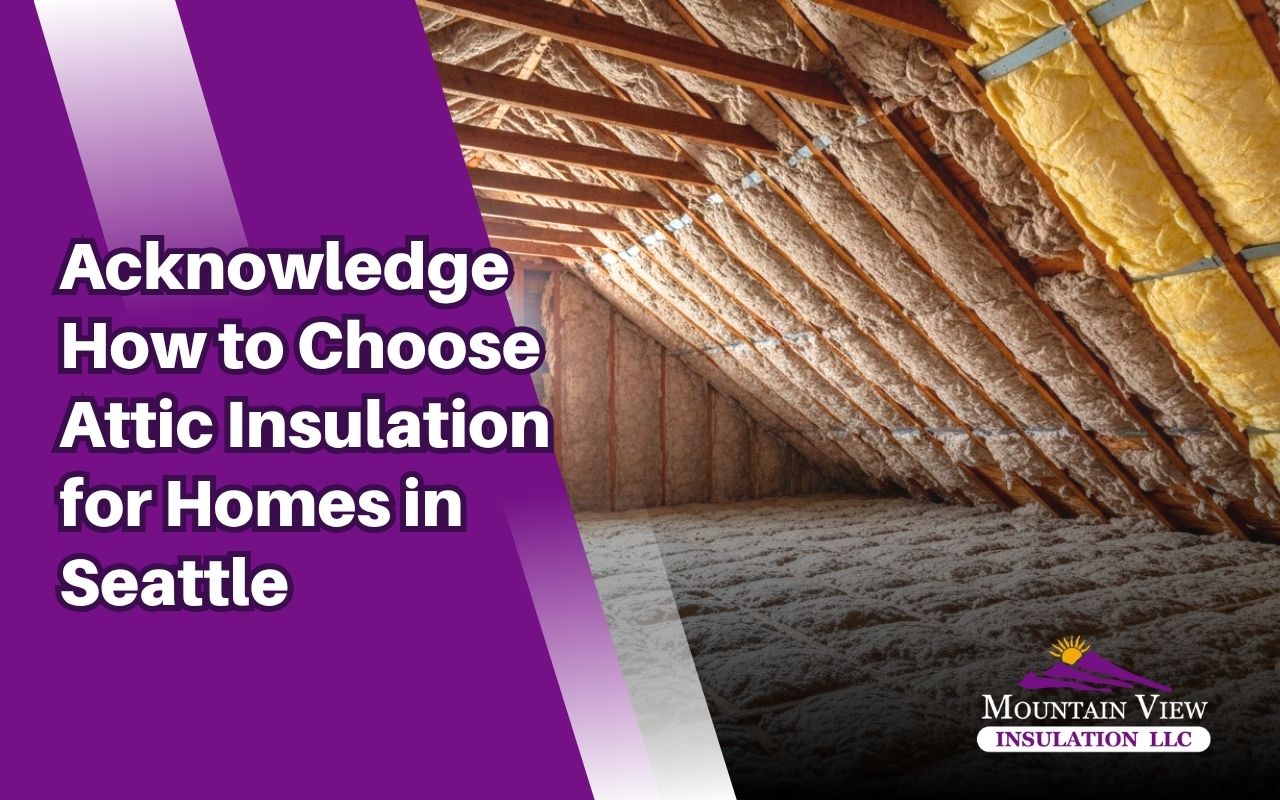
Choosing attic insulation in Seattle takes more than picking the first material you see. With rain, damp air, and cool seasons, how to choose attic insulation for homes in Seattle should start with climate, moisture, and attic layout.
At Mountain View Insulation, LLC, we help homeowners look at comfort, energy use, and long-term value. That way, the insulation you choose fits your home well and works through Seattle’s changing weather.
Understanding Seattle Climate Before Picking Your Attic Insulation
Seattle homes deal with damp winters, mild summers, and frequent moisture. Because of that, insulation must do more than slow heat loss. It should also support airflow and help reduce the risk of trapped moisture in the attic.
When you review attic insulation options, think about comfort in every season. A good choice can help rooms feel more even, reduce drafts, and support lower energy use across the year.
Comparing Common Attic Insulation Materials For Lasting Comfort
Several attic insulation materials can work well in Seattle homes. However, each option has different strengths, so it helps to compare cost, moisture behavior, and expected performance before you decide.
- Fiberglass is affordable and widely used, but it needs careful placement to avoid gaps.
- Cellulose fills corners well and uses recycled content, though moisture control is important.
- Spray foam seals cracks tightly and gives strong performance, yet it costs more upfront.
- Mineral wool offers fire resistance, sound control, and steady durability over time.
If you want more detail on local service options, visit service options for nearby homes to compare project approaches and insulation goals.
R-Value Goals That Matter In Seattle Area Homes
R-value shows how well insulation slows heat flow. Even so, the right level depends on your attic space, current insulation, and how much improvement your home still needs.
When planning how to choose attic insulation for homes in Seattle, thickness and material should work together. Some homes do well with deeper loose-fill layers, while others need higher-performance products in smaller spaces.
Moisture Control Steps That Protect Attic Performance Year-Round
Moisture can reduce insulation performance and lead to mold or wood damage. Therefore, a dry attic matters just as much as a warm attic in Seattle.
- Seal air leaks around vents, lights, and ceiling openings.
- Use proper ventilation to move damp air out.
- Add the right vapor control for your attic design.
- Choose materials that handle local moisture conditions better.
Because of the local climate, how to choose attic insulation for homes in Seattle should always include a clear moisture plan from the start.
Professional Installation Choices That Reduce Future Problems At Home
Good materials still need good installation. If insulation is uneven, compressed, or poorly sealed, your attic may lose performance faster than expected.
- Ask about experience with attic insulation installation in damp climates.
- Request a clear scope of work, including cleanup and ventilation checks.
- Check insurance, reviews, and warranty details before work begins.
At Mountain View Insulation, LLC, we look at attic condition, insulation depth, and airflow before recommending a solution. That helps homeowners avoid guesswork and feel more confident in the final result.
Eco-Friendly Insulation Paths For Lower Energy Waste At Home
Some homeowners want insulation that supports better comfort and a smaller environmental impact. In that case, cellulose, cotton, sheep’s wool, and other low-impact products may be worth a closer look.
These choices can support healthier indoor spaces when installed correctly. Still, they should be matched with proper ventilation and moisture control so performance stays steady over time.
Balancing Cost Comfort And Long-Term Home Efficiency
The best choice is not always the cheapest one at first. Instead, think about how the material performs over time, how much maintenance it may need, and how well it fits your attic layout.
For many homeowners, how to choose attic insulation for homes in Seattle comes down to balancing budget, comfort, and durability. A smart plan can improve daily comfort and support energy savings for years.
Frequently Asked Questions
What insulation works best in a damp Seattle attic?
That depends on your attic design and moisture control. Mineral wool and spray foam are often strong choices, while fiberglass and cellulose can also work well when ventilation and sealing are handled correctly.
Is fiberglass still a good option for older homes?
Yes, it can be a practical option when budget matters. Still, it should be installed carefully so gaps do not reduce performance in hard-to-reach areas.
Why does R-value matter so much?
R-value helps show how well insulation slows heat transfer. As a result, it helps guide material choice and thickness for better comfort and improved energy use.
Should I replace old insulation or add more?
That depends on its condition. If the current material is dry and in decent shape, adding more may help. If it is damaged, wet, or uneven, replacement may be the better path.
When should I call a professional?
If you are unsure about moisture, air leaks, or material choice, professional guidance can save time and prevent costly mistakes. Our team can review your attic and explain how to choose attic insulation for homes in Seattle in a clear way.
Choosing The Best Long-Term Plan For Your Attic
A lasting insulation plan should match Seattle’s weather, your attic’s condition, and your comfort goals. The right mix of material, thickness, and ventilation can make a clear difference in how your home feels every day.
In the end, how to choose attic insulation for homes in Seattle is about making a careful, informed decision. With the right support, attic insulation installation can improve comfort, protect efficiency, and give your home stronger year-round performance.