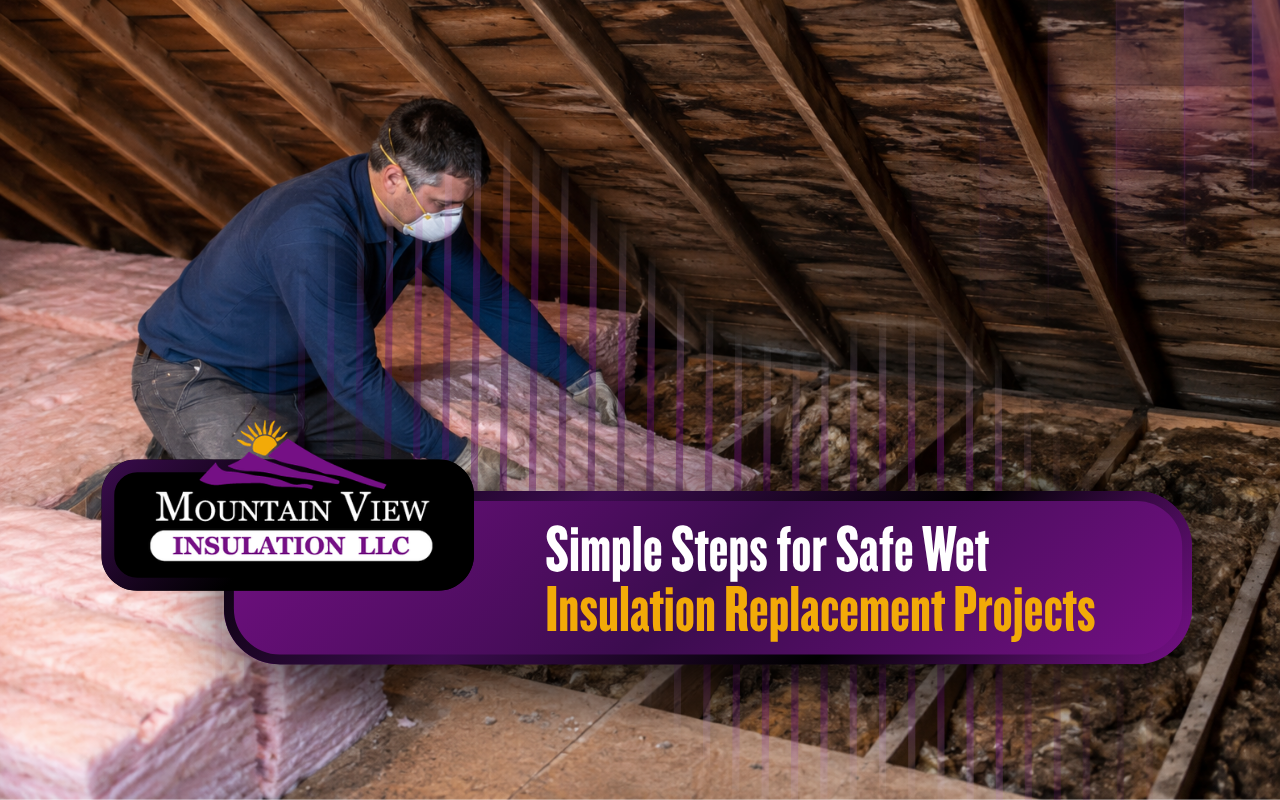
Wet insulation replacement protects your home from hidden moisture, poor comfort, and rising energy use. When insulation stays damp, it can lose performance and create conditions where mold may grow. It may also leave nearby wood wet, weaken indoor comfort, and hide damage above ceilings or behind walls.
At Mountain View Insulation, LLC, we help homeowners understand the problem before it spreads. This guide explains clear steps for finding damage, removing affected material, drying the space, and installing new insulation correctly.
Early Warning Signs Inside Attics and Hidden Walls
Dark stains, musty smells, or soft insulation can point to water damaged insulation. You may also notice cold rooms, warm spots, or higher energy bills because wet material cannot hold indoor temperatures well.
- Look for dark patches, sagging batts, or damp wood.
- Check for moldy insulation signs near vents and pipes.
- Notice drafts, odors, or sudden changes in comfort.
Our attic inspection checklist can help you review common problem areas before damage becomes harder to manage.
Why Fast Action Protects Your Entire Home Environment
Quick wet insulation replacement can lower the risk of mold spreading into wood, drywall, or nearby rooms. It also helps protect indoor air quality, especially when moisture has remained unnoticed for days or weeks.
Damp insulation problems can also make heating and cooling systems work harder. For more guidance, read how insulation affects indoor air quality and why early action matters.
Careful Inspection Reveals the Full Hidden Damage Area
Start with a visual check of the attic, walls, or crawl space. Use a bright light to find stains, wet framing, roof leaks, or plumbing drips. Photos can help you compare changes over time.
A moisture meter can show how far insulation moisture damage has spread. Check several places, including roof edges, vents, pipes, and low spots. When moisture covers a wide area, full replacement may be safer than a small repair.
Safety Steps Before Removing Damaged Insulation Materials Safely
Before you replace wet attic insulation, protect yourself from dust, fibers, and possible mold. Turn off nearby power, keep the work area open to fresh air, and block access from living spaces.
- Wear gloves, goggles, long sleeves, and an N95 mask.
- Use plastic sheeting to control dust and loose debris.
- Keep bags and tools close for simple cleanup.
When customers contact Mountain View Insulation, LLC, we explain whether the area is safe for home removal or needs professional care.
Proper Removal and Drying Prevent Future Moisture Problems
Cut wet batts into smaller pieces and place them directly into strong bags. For loose-fill material, use proper equipment that limits dust. Avoid shaking insulation because this can spread dirty particles through the space.
After removal, dry the wood and surrounding surfaces fully. Fans and a dehumidifier can reduce trapped moisture. Do not install new material until the area feels dry and the leak or water source has been repaired.
Better Materials Support Lasting Comfort and Home Protection
The best replacement depends on your climate, attic design, and moisture risk. Fiberglass, cellulose, and spray foam each behave differently around water, so the right choice should match the space and the cause of damage.
- Choose the correct R-value for your home and region.
- Avoid materials that may trap future moisture.
- Keep vents open and do not compress new insulation.
Our guide on when attic insulation should be replaced gives more detail about timing and material condition.
Frequently Asked Questions
Can Wet Insulation Dry Without Being Replaced?
Sometimes a very small damp area can dry, but soaked or dirty material often loses performance. Wet insulation replacement is usually safer when fibers are compressed, moldy, or exposed for too long.
What Causes Insulation To Become Wet Indoors?
Roof leaks, plumbing problems, blocked vents, and indoor condensation are common causes. Finding the source first is essential, or the new insulation may become damaged again.
How Can I Spot Moldy Insulation Signs?
Look for musty odors, dark spots, unusual colors, or damp wood nearby. Mold may also appear where airflow is weak or water has stayed hidden.
Should I Replace All Attic Insulation?
Not always. Small areas may need local removal, while wide moisture damage may require a larger project. An inspection can show which approach is best.
When Should I Call an Insulation Professional?
Call for help when damage is widespread, mold is visible, electrical parts are wet, or access is unsafe. Our Tacoma insulation services explain available support.
Long-Term Care Keeps New Insulation Working Properly Longer
After wet insulation replacement, check the roof, gutters, vents, and plumbing several times each year. A simple seasonal review can catch loose flashing, blocked airflow, slow plumbing drips, and early stains before they become larger problems.
At Mountain View Insulation, LLC, we focus on clear guidance and careful work. Regular inspections, good ventilation, and fast repairs can protect comfort, air quality, and energy use for years. To discuss your home, contact our insulation team for clear next steps. These habits support every wet insulation replacement project.