Choosing open cell vs closed cell spray foam in Tacoma, WA can shape your comfort, energy use, and moisture control. At Mountain View Insulation, LLC, we help homeowners compare both options in a simple way, so the final choice fits the home and the space.
Because Tacoma weather can bring damp air and cool seasons, the right foam matters more than many people expect. Some areas need better sound control, while others need stronger moisture defense. Therefore, knowing where each foam works best helps you avoid costly mistakes later.
Understanding Open Cell And Closed Cell Foam Differences
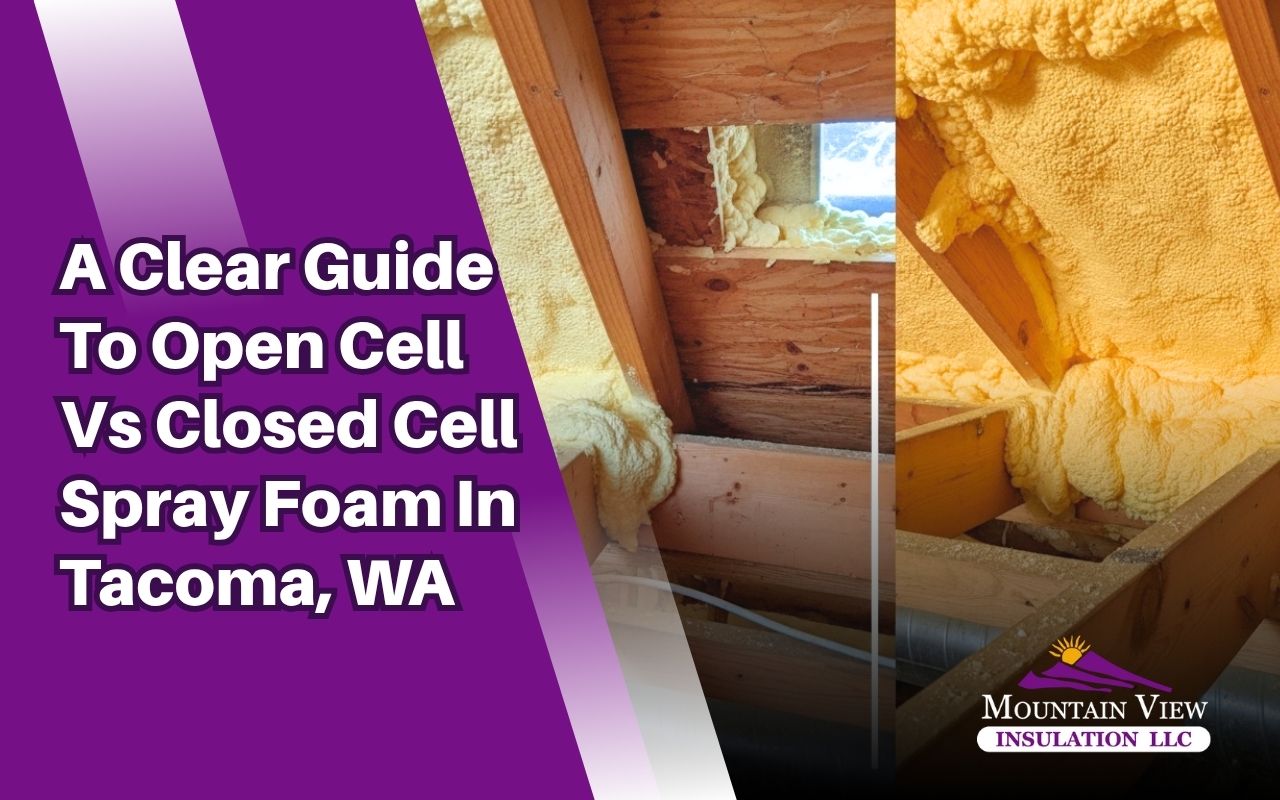
Open cell foam is softer, lighter, and expands more during installation. As a result, it fills small gaps well and can help reduce sound between rooms. It is often chosen for open cell spray foam insulation in Tacoma, WA when flexibility and broad coverage matter most.
Closed cell foam is denser and harder after it cures. Because of that, it creates a stronger air seal and adds better resistance to water. Many homeowners compare both materials when weighing closed cell spray foam insulation in Tacoma, WA for spaces that need higher strength and tighter protection.
How Tacoma Weather Shapes Your Home Insulation Choice
Tacoma homes often deal with cool temperatures, rain, and changing humidity. For that reason, open cell vs closed cell spray foam in Tacoma, WA is not only about price. It is also about how each material responds to moisture, air leaks, and long-term comfort.
Open cell foam can work well in spaces that need airflow balance and sound absorption. However, closed cell foam is usually the better fit where water exposure is a bigger concern. Our team at Mountain View Insulation, LLC looks at each area carefully before recommending the best path.
Best Areas For Spray Foam Around Tacoma Homes
Different parts of a home often need different insulation solutions. That is why one foam type does not always fit every room. When homeowners ask us about spray foam insulation in Tacoma, WA, we explain where each product tends to perform best.
- Attics often benefit from open cell foam when sound control and full coverage are priorities.
- Crawl spaces often need closed cell foam because it handles moisture and air sealing better.
- Exterior walls may benefit from closed cell foam when space is limited and higher R-value is needed.
In many cases, spray foam for attic insulation works best when the roofline, depth, and ventilation plan are reviewed first. Likewise, spray foam for crawl spaces should match the moisture conditions under the home, not just the budget.
Comparing Energy Savings And Long Term Home Value
When people compare open cell vs closed cell spray foam in Tacoma, WA, energy performance is usually a major factor. Closed cell foam offers a higher R-value per inch, so it can deliver stronger insulation in tight spaces.
Open cell foam can still support strong comfort levels, especially when there is room for thicker application. Even so, the better option depends on your goals. Some homeowners want lower upfront costs, while others want stronger long-term savings and added moisture protection.
- Open cell foam usually costs less at the start.
- Closed cell foam often brings better thermal performance in less space.
- Long-term value depends on the area being insulated and local moisture conditions.
Sound Control And Daily Comfort Inside Tacoma Rooms
Sound reduction is another reason homeowners compare foam types. Open cell foam absorbs sound better, so it can help quiet bedrooms, living spaces, and shared walls. Therefore, it is often preferred when indoor noise is just as important as energy savings.
Closed cell foam is still effective for sealing drafts and improving comfort. Yet it does not soften sound the same way. At Mountain View Insulation, LLC, we often explain this difference when families want a quieter home along with better indoor temperature control.
Frequently Asked Questions
What is the main difference between the two foams?
Open cell foam is softer and expands more, while closed cell foam is denser and more resistant to moisture.
Which foam is better for damp spaces?
Closed cell foam is usually the better choice for crawl spaces and other areas where moisture control matters most.
Is open cell foam good for attics?
Yes, it can be a strong option for attics, especially when sound control and wide expansion are helpful.
Does closed cell foam save more energy?
It often can, because it has a higher R-value per inch and creates a stronger air barrier in limited space.
Who should I contact for a local recommendation?
You can get in touch with us through our contact page to discuss the right insulation plan for your home.
Signs Professional Installation Matters Right From The Start
Good materials still need skilled installation. If the foam is mixed or applied the wrong way, the results may fall short. Because of that, homeowners should look for trained installers who understand local homes, weather conditions, and the best use of each product.
Professional guidance also helps when comparing open cell vs closed cell spray foam in Tacoma, WA across attics, crawl spaces, and wall cavities. A careful review can prevent wasted material, uneven coverage, and future moisture concerns.
- Proper installation helps foam cure and perform as expected.
- Correct product choice depends on the exact area of the home.
- Experienced installers can spot air leaks and moisture risks early.
Plan Your Next Insulation Project With Confidence Today
The best insulation choice depends on your home layout, moisture exposure, and comfort goals. Some areas call for softness and sound control, while others need stronger water resistance. For this reason, open cell and closed cell foam should be matched to the job, not chosen by trend alone.
If you are reviewing open cell vs closed cell spray foam in Tacoma, WA, we are ready to help you move forward with clarity. Our team can guide you toward the right solution for lasting comfort, cleaner efficiency, and better protection throughout the year.