Cold floors, damp smells, and rising energy use can point to hidden trouble below your home. These signs your crawl space needs an insulation upgrade often appear slowly, so they are easy to miss until comfort drops or damage begins.
At Mountain View Insulation, LLC, we help homeowners notice early warning signs and choose practical next steps. By checking the space below your floors, you can protect indoor comfort, reduce moisture, and avoid larger repair needs.
Cold Floors Often Reveal Hidden Insulation Weaknesses Below
Cold floors and crawl space drafts often mean warm indoor air is escaping. Tile, wood, or laminate may feel icy even when the heating system is running. This is one of the clearest underfloor insulation signs, especially when some rooms feel colder than others.
Our guide to common underfloor warning signs explains what homeowners should watch for. Better insulation creates a useful barrier between the crawl space and the rooms above.
Changes can also help you spot the problem early. Watch for rooms that cool down after the heat turns off, or floors that feel different near outside walls. These patterns may show where insulation has shifted, fallen, or left open spaces beneath the home.
Musty Odors Can Signal Moisture Beneath Your Floors
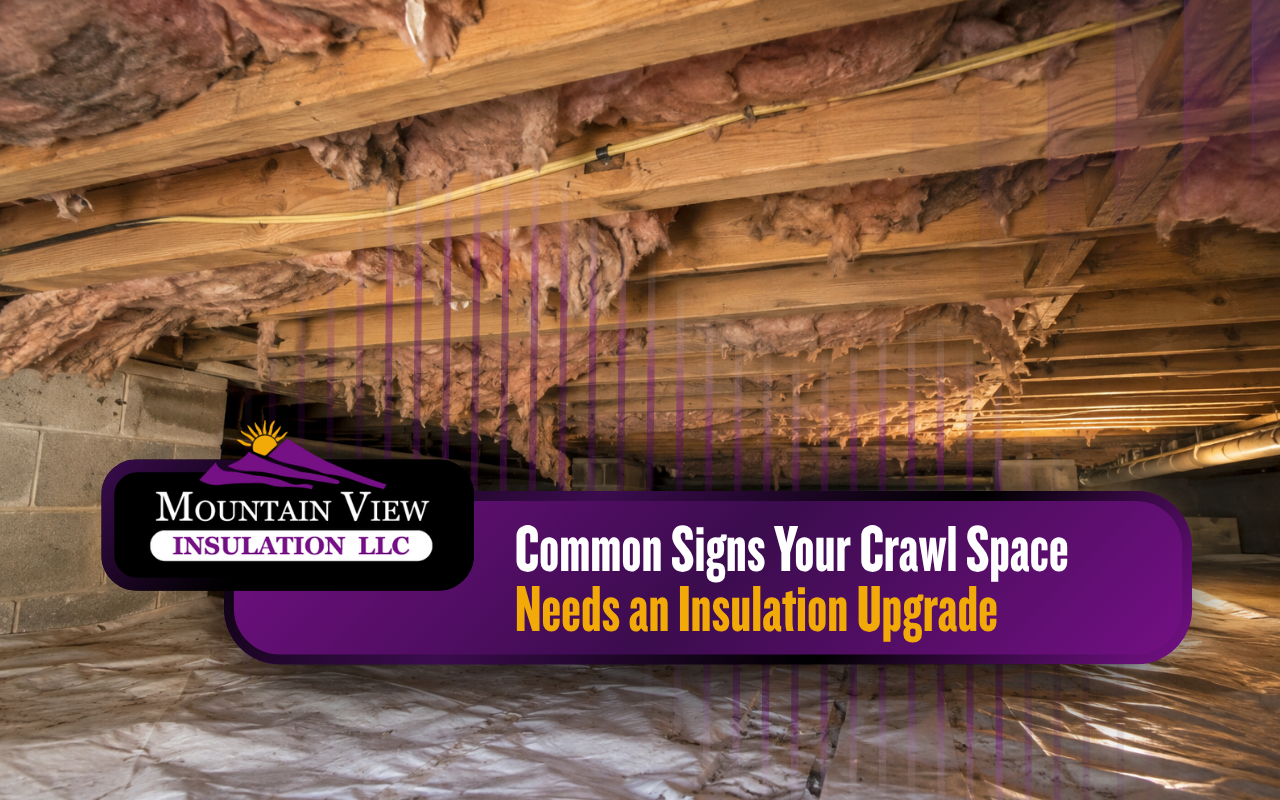
Musty or sour smells may come from moisture under floors. Damp insulation can hold water, support mold growth, and spread unpleasant odors into nearby rooms. When those smells return after cleaning, the source may be below the living area.
- Persistent damp smells near floor vents
- Dark marks on wood or insulation
- Condensation on pipes or framing
These signs your crawl space needs an insulation upgrade deserve quick attention. Our page on insulation and moisture control explains how both problems should be handled together.
Higher Energy Bills May Point Toward Air Loss
A sudden increase in heating or cooling costs can reveal crawl space insulation problems. Weak or damaged material lets indoor air escape through the floor. As a result, your system runs longer to keep rooms comfortable.
At Mountain View Insulation, LLC, we look at insulation gaps, air leaks, and moisture conditions as one connected issue. Fixing these areas can support steadier temperatures and lower energy waste throughout the year.
Pests And Rodents Expose Gaps Around Crawl Spaces
Mice, insects, and other pests often enter through small gaps around vents, pipes, or foundation edges. Once inside, they may tear insulation, build nests, or leave waste behind. These problems can quickly reduce insulation performance.
- Droppings near beams or vents
- Gnawed insulation or wiring
- Nesting material under the floor
Sealing entry points and replacing damaged material can solve several crawl space comfort issues at once. It also helps protect the space from further damage.
Allergy Symptoms May Start In Damp Crawl Spaces
Sneezing, coughing, or itchy eyes indoors may be linked to mold, dust, or pest waste below the floor. Damp crawl spaces allow these particles to grow and move into the home through small openings.
When signs your crawl space needs an insulation upgrade appear with ongoing allergy symptoms, a full inspection is wise. Dry insulation, sealed gaps, and proper moisture control can support cleaner indoor air.
Structural Changes Show Moisture Has Become More Serious
Sagging floors, warped boards, or soft wood can mean moisture has remained under the home for too long. Wet insulation loses value and may keep nearby framing damp. Over time, this can weaken wood and metal parts.
- Uneven or bouncy floors
- Cracked or stained support beams
- Rust on metal fasteners
Our overview of proper underfloor installation steps shows why correct placement matters. Good work helps insulation stay dry, secure, and effective.
Frequently Asked Questions
Why do my floors stay cold indoors?
Cold floors often come from missing, thin, or damaged insulation. Air leaks below the floor can make the problem worse.
Can wet insulation still work well?
No. Wet material usually loses performance and may support mold. It should be checked and replaced when needed.
Do high energy bills always mean poor insulation?
Not always, but rising costs can be one of the signs your crawl space needs an insulation upgrade when drafts or uneven temperatures also appear.
How often should a crawl space be inspected?
A yearly check is helpful. However, inspect sooner after heavy rain, pest activity, or sudden changes in indoor comfort.
Can insulation help control crawl space moisture?
Insulation helps, but it should work with air sealing, drainage, and a moisture barrier for better protection.
Create A Warmer Home With Lasting Underfloor Protection
A professional review can confirm whether the issue comes from insulation, moisture, air leaks, or several causes together. These signs your crawl space needs an insulation upgrade make repairs more focused and prevent needless replacement.
Recognizing the signs your crawl space needs an insulation upgrade can prevent larger comfort and moisture problems. Early action helps protect floors, framing, indoor air, and energy use before damage spreads.
With Mountain View Insulation, LLC, you receive clear guidance based on your home’s needs. Review our under-floor insulation service details or get in touch with us to discuss the next step.