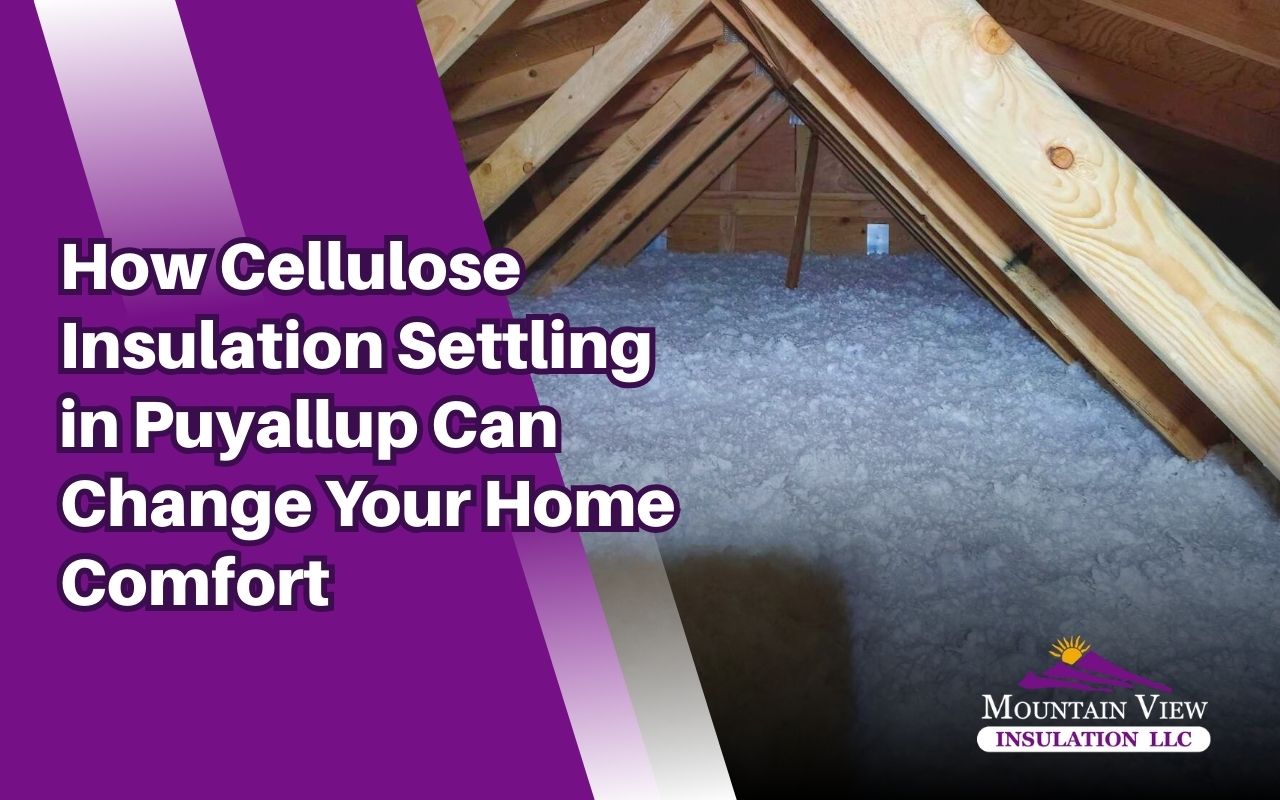
Settling into your comfortable home during a chilly Puyallup winter should feel easy. However, insulation can slowly lose strength over time. Cellulose insulation settling in Puyallup may reduce comfort and raise energy use.
As insulation compresses, you can see R-value loss and weak coverage. Therefore, rooms may feel colder and bills may rise. With thermal imaging and an insulation audit, Mountain View Insulation LLC can help spot hidden issues and plan a cellulose top-up.
Understanding Cellulose Insulation Settling in Puyallup
When cellulose first fills an attic, installers target a specific density for strong performance. Over time, fibers press down and shift. As a result, coverage can thin in key areas.
In Puyallup, moisture and indoor damp air can speed this change. Consequently, insulation may compact near the attic hatch, where people move and air leaks. Cellulose insulation settling in Puyallup can create gaps that let heat move more freely.
- Fibers can compress under their own weight.
- Small vibrations can shift the material.
- Moist air can help fibers clump together.
How Settling Affects Energy Use
Cellulose helps slow heat movement, but settling weakens that barrier. Therefore, more heat can escape through the attic. Then your furnace or heat pump may run longer to keep temperatures steady.
Even a small drop in thickness can matter. In fact, each inch supports the overall R-value. With thermal imaging, Mountain View Insulation LLC can spot cooler zones that suggest thinning insulation and growing R-value loss.
- Longer heating cycles during winter.
- More uneven temperatures across rooms.
- Higher monthly energy use.
Signs Your Attic Insulation Has Shifted
Often, comfort changes show up first in daily living. For example, you may notice cold spots on ceilings or drafts near the attic hatch. Additionally, some rooms may feel warmer than others.
Because Puyallup can be damp, cellulose may pack down faster in certain spots. Cellulose insulation settling in Puyallup can also look like dips or firm areas when you check from the attic.
Quick checks you can do
Start with simple measurements across the attic. Then compare the depth in several places. If results vary a lot, coverage may be uneven.
- Measure insulation depth in multiple locations.
- Look for thin paths near vents and edges.
- Check around the attic hatch for bare spots.
Why Keeping the Right R-Value Matters
R-value shows how well insulation resists heat flow. So, higher values usually mean better comfort. In Puyallup winters, maintaining the right level helps your heating system work less.
When density drops, performance can drop too. Consequently, your attic becomes a weak point. Cellulose insulation settling in Puyallup can lower comfort, raise energy use, and increase strain on HVAC equipment.
How to Do an Insulation Audit at Home
An insulation audit starts with a visual look. Open the attic hatch and check for thin spots, uneven areas, or signs of dampness. Next, record depth readings to map where coverage is low.
For a clearer view, thermal imaging can show where heat is escaping. Mountain View Insulation LLC can combine images with depth readings to guide a plan. If you want a helpful overview of cellulose systems, see cellulose insulation in Tacoma WA.
Fixing Thin Spots with a Cellulose Top-Up
A cellulose top-up adds fresh material over areas that have compressed. Therefore, it restores depth and improves coverage. Before adding more, fix any moisture sources, since trapped damp air can worsen problems.
Installers also aim for balanced density. That way, the layer stays stable and even. Cellulose insulation settling in Puyallup is often most noticeable around the attic hatch, so careful filling there matters.
- Resolve moisture issues before adding material.
- Distribute cellulose evenly across the attic floor.
- Pay extra attention near the attic hatch.
Frequently Asked Questions
How fast can cellulose settle in a damp climate?
It can happen slowly over months and years. However, damp conditions can speed compaction, especially in trouble spots.
What does density mean for attic insulation?
Density is how tightly the material is packed. If it is too low, it can settle more. If it is too high, it can reduce air pockets.
How can thermal imaging help?
Thermal imaging shows warmer and cooler areas. Therefore, it can reveal heat loss paths tied to thin insulation zones.
What is R-value loss and why does it matter?
R-value loss means less resistance to heat flow. As a result, your home can feel colder and your HVAC may work harder.
When should I schedule an insulation audit?
If you feel drafts, uneven temperatures, or rising bills, schedule one soon. Also, audits help after roof work or moisture events.
When to Call a Pro in Puyallup
Professionals can measure depth, check air leaks, and confirm issues with thermal imaging. Then they can recommend the right cellulose top-up amount. Mountain View Insulation LLC can also help seal leaks near the attic hatch for better results.
If you want to learn how insulation ratings affect comfort, read what R-value means for home insulation. When you are ready, reach out through the contact page to book an insulation audit and discuss next steps.
Keeping Your Home Cozy All Year
Regular checks help you catch problems early. With an insulation audit and thermal imaging, you can spot coverage changes before comfort drops. Cellulose insulation settling in Puyallup can be managed with timely action.
By restoring depth with a cellulose top-up and keeping steady density, you support comfort and energy savings. Mountain View Insulation LLC can guide the process so your home stays warm, efficient, and dependable.