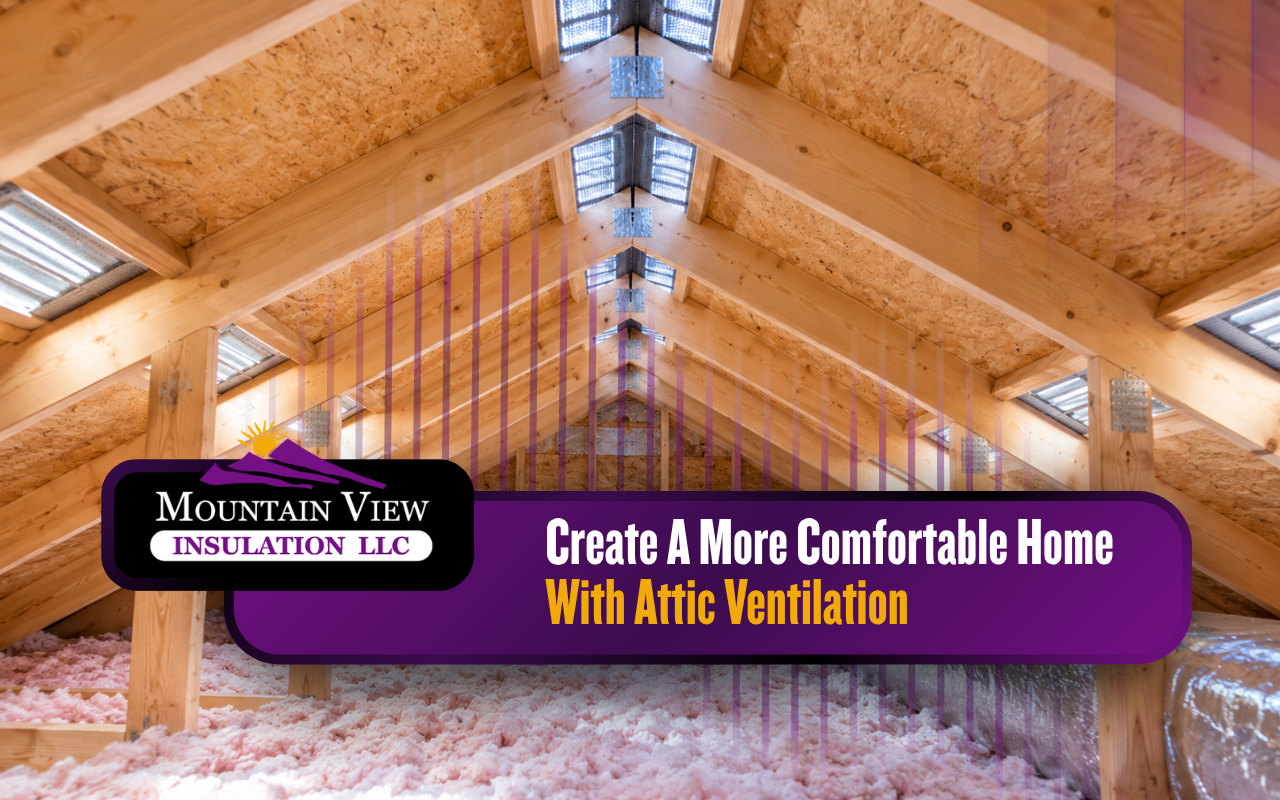
Attic ventilation plays a major role in how comfortable your home feels through every season. When heat and moisture stay trapped above your living space, indoor temperatures can change quickly, and your heating or cooling system may work harder than needed.
At Mountain View Insulation, LLC, we look at airflow, insulation, and air sealing together. A balanced attic can support steady indoor comfort, protect building materials, and help your home use energy more wisely throughout the year.
Balanced Airflow Matters For Everyday Home Comfort
Good attic airflow allows fresh air to enter low areas while warmer, damp air leaves near the roof peak. This steady movement reduces heat buildup during summer and helps control attic moisture during colder months.
Balanced airflow also supports insulation performance because dry insulation works better than damp insulation. For more guidance, review our attic insulation service options and see how ventilation and insulation can work together.
Warning Signs Your Attic Needs Better Air Movement
Poor attic ventilation may show up in several ways. Upper rooms can feel much hotter in summer, or you may notice musty smells, ceiling stains, or damp areas in the attic. Rising energy use can also signal that trapped heat is affecting indoor comfort.
- Uneven temperatures between floors
- Visible moisture or dark roof sheathing
- Blocked or damaged attic vents
- Insulation that looks damp or compressed
Roof Ventilation Supports Better Energy Use Year Round
Roof ventilation helps release excess heat before it moves into your living areas. As a result, your cooling system may run less during warm weather. In winter, steady airflow can also reduce condensation on cold roof surfaces.
Air sealing matters too because warm indoor air can leak into the attic through small gaps. Our guide on air sealing and insulation differences explains why both steps can support a more efficient home.
Common Vent Types For Balanced Attic Airflow Systems
Most homes use a mix of intake and exhaust attic vents. Soffit vents bring outside air into the lower attic, while ridge or roof vents let warmer air leave. When both sides are sized correctly, airflow stays more consistent.
- Soffit vents for lower air intake
- Ridge vents for steady upper exhaust
- Gable vents for selected attic layouts
- Powered fans for special airflow needs
At Mountain View Insulation, LLC, we can help homeowners understand which setup fits the attic shape, roof design, and existing insulation condition.
Proper Vent Sizing Helps Prevent Moisture Problems Indoors
Vent sizing should match the attic area and local building needs. Too little airflow can trap heat and humidity, while too much exhaust without enough intake may pull conditioned air from the home.
Because every attic is different, balanced attic ventilation should be planned after a careful inspection instead of guessing. Checking net free vent area, soffit openings, and roof exhaust points can reveal where airflow is limited and where small changes may improve attic moisture control.
Simple Steps That Protect Insulation And Roof Materials
Homeowners can support attic ventilation by keeping intake paths clear and watching for blocked vents. Insulation should not cover soffit openings, and baffles can help maintain a clear path for incoming air.
- Keep soffit vents free from insulation
- Check roof vents for visible blockage
- Seal air leaks below the attic
- Watch for stains, dampness, or odors
Our attic insulation tips for homeowners offer more practical ways to protect insulation performance and comfort.
Frequently Asked Questions
How does attic airflow improve indoor comfort?
Steady airflow helps move excess heat and moisture out of the attic. This can reduce temperature swings upstairs and support a more comfortable living space in both warm and cold seasons.
Can blocked vents damage attic insulation?
Yes. Blocked airflow can allow moisture to stay in the attic. Damp insulation may lose effectiveness and can create conditions that affect nearby wood and roof materials.
Do all homes need the same vent setup?
No. Roof shape, attic size, insulation, and existing vent locations all affect the right setup. A balanced system should match the needs of the specific home.
Can air sealing improve ventilation performance?
Yes. Air sealing limits warm, moist indoor air from leaking into the attic. That allows roof ventilation to manage outside airflow without pulling as much conditioned air from living spaces.
When should a professional inspect attic vents?
An inspection is useful when you notice moisture, uneven temperatures, blocked vents, or high energy use. It can also help before changing insulation or adding new vent products.
Professional Guidance Creates A Healthier Attic Over Time
At Mountain View Insulation, LLC, we review insulation, air leakage, and attic ventilation as parts of the same comfort system. This approach helps identify airflow problems before they lead to moisture damage, wasted energy, or reduced insulation performance.
If your attic feels too hot, shows signs of moisture, or has unclear venting, consult our team for attic guidance. You can also read our home energy efficiency guide for more ways to improve comfort.