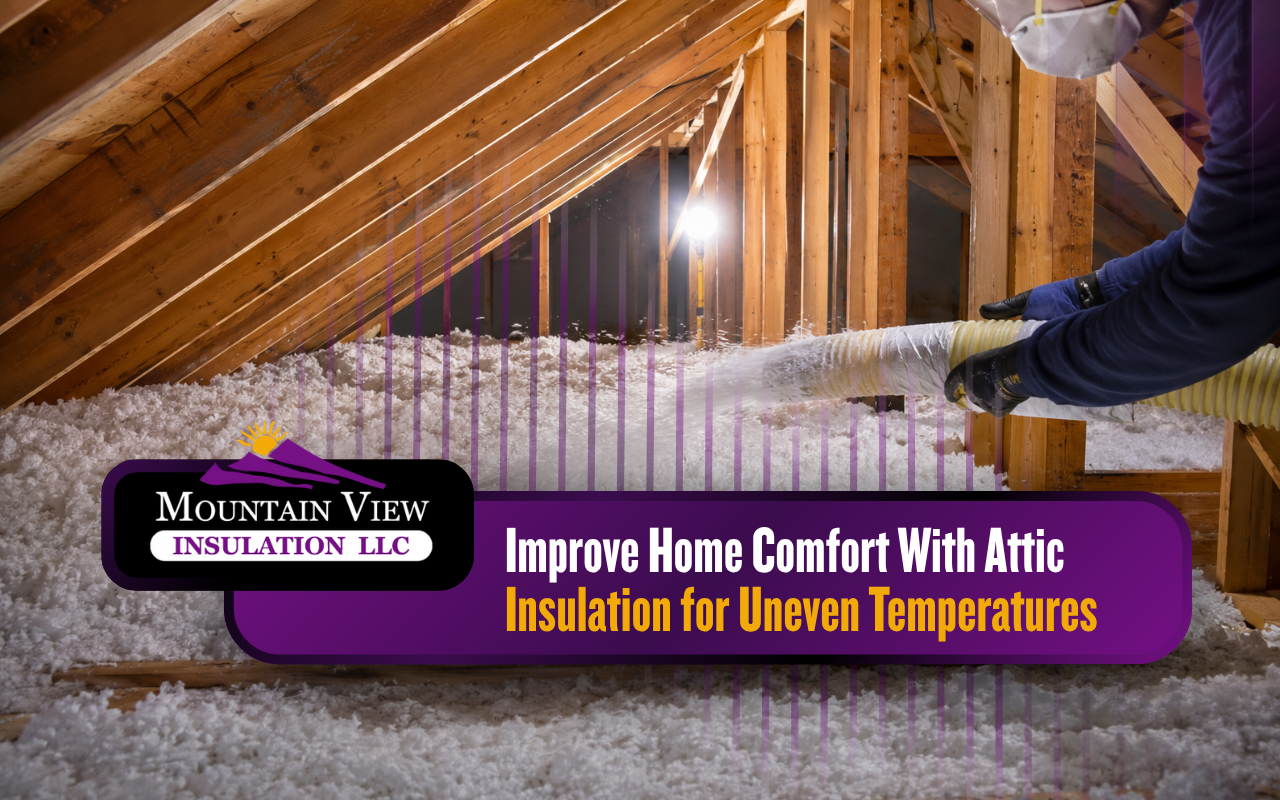
Attic insulation for uneven temperatures can make every room feel more comfortable through changing seasons. When heat escapes or enters through the attic, bedrooms and living areas may feel very different. Better insulation slows that movement, supports steady indoor comfort, and helps your heating and cooling system work with less strain.
At Mountain View Insulation, LLC, we help homeowners identify why certain spaces feel too warm or too cold. Our team checks attic conditions, insulation depth, air leaks, and access points. As a result, we can recommend practical steps that support a more balanced and comfortable home.
Attic Insulation Shapes Comfort Throughout Your Home
Heat moves toward cooler areas, so an unprotected attic can affect the rooms below it. During winter, warm indoor air may rise and escape. During summer, attic heat can move downward. Attic insulation for uneven temperatures creates a barrier that reduces this transfer and keeps indoor conditions more stable.
Good insulation supports attic insulation comfort by helping your HVAC system hold the set temperature. Therefore, rooms change less when outdoor weather shifts, improving comfort from one level to another.
Common Warning Signs Your Attic Needs Better Insulation
Uneven room temperatures often point to weak insulation or hidden air leaks. One bedroom may stay hot while another feels cool. In addition, second-floor temperature issues can worsen after attic heat builds for hours.
- Bedrooms feel warmer or colder than nearby rooms.
- Ceiling areas feel unusually hot or cool.
- Energy use rises without a clear reason.
- Drafts appear near lights or attic openings.
Our attic insulation service options explain how an inspection can reveal gaps, damage, and weak coverage.
How Hidden Air Leaks Create Uneven Indoor Temperatures
Insulation alone cannot stop every comfort problem. Openings around wiring, pipes, vents, and fixtures let air move between the attic and living space. Consequently, thick insulation may still perform poorly.
At Mountain View Insulation, LLC, we look for leak paths before recommending attic insulation for uneven temperatures. Sealing those areas first helps the insulation work as intended. It can also reduce hot and cold spots in the house and keep conditioned air where your family needs it.
Insulation Materials That Support Better Home Temperature Balance
Several materials support insulation for temperature balance. The best choice depends on access, existing material, moisture, and attic shape. A careful review helps avoid gaps, compression, and poor coverage.
- Fiberglass batts fit open spaces with regular framing.
- Loose-fill fiberglass covers broad attic floor areas.
- Cellulose fills small gaps and uneven spaces well.
- Spray foam seals difficult cracks and air paths.
Our practical attic insulation tips can help you understand what to review before improving an older or under-insulated attic.
Professional Installation Protects Comfort And Long-Term Performance
Attic work may look simple, but poor installation can leave thin areas, blocked vents, or compressed material. These mistakes reduce performance and may allow second-floor temperature issues to continue.
With Mountain View Insulation, LLC, you receive clear guidance based on the actual condition of your attic. We plan attic insulation for uneven temperatures around coverage, airflow, and safe access. This approach supports better results than adding material without first finding the source of the problem.
Simple Steps That Improve Your Attic Insulation Results
A complete comfort plan includes more than new insulation. Sealing leaks, checking ducts, and improving the attic hatch strengthen the system, helping conditioned air stay inside.
- Seal gaps around pipes, wiring, and ceiling fixtures.
- Insulate and secure exposed attic ductwork.
- Add weatherstripping around the attic access hatch.
- Keep soffit and roof vents open and clear.
For more ways to reduce energy waste, review our home energy efficiency guidance.
Frequently Asked Questions
Can attic insulation fix hot upstairs bedrooms?
It can reduce heat movement from the attic and improve upstairs comfort. However, air leaks, weak ducts, and poor airflow may also need attention.
How much insulation does an attic need?
The right amount depends on climate, material, and current insulation depth. A professional inspection can identify areas that need added coverage.
Will new insulation lower uneven room temperatures?
Yes, when poor attic coverage is the main cause. Sealing air leaks first often improves the final result.
Does attic insulation help during summer?
Yes. It slows attic heat from entering rooms below and supports steadier indoor temperatures during hot weather.
Should attic ducts be insulated too?
Yes. Insulated, sealed ducts reduce lost heating and cooling, especially when ductwork runs through an unconditioned attic.
Create Steadier Home Comfort Throughout Every Season Ahead
Attic insulation for uneven temperatures can improve comfort and support efficient HVAC use. With proper coverage, air sealing, and duct checks, you can address uneven conditions instead of only adjusting the thermostat.
When you are ready to improve attic insulation comfort, our team at Mountain View Insulation, LLC can explain how attic insulation for uneven temperatures fits your home. You can also read how attic insulation manages upstairs heat or contact our team for guidance.