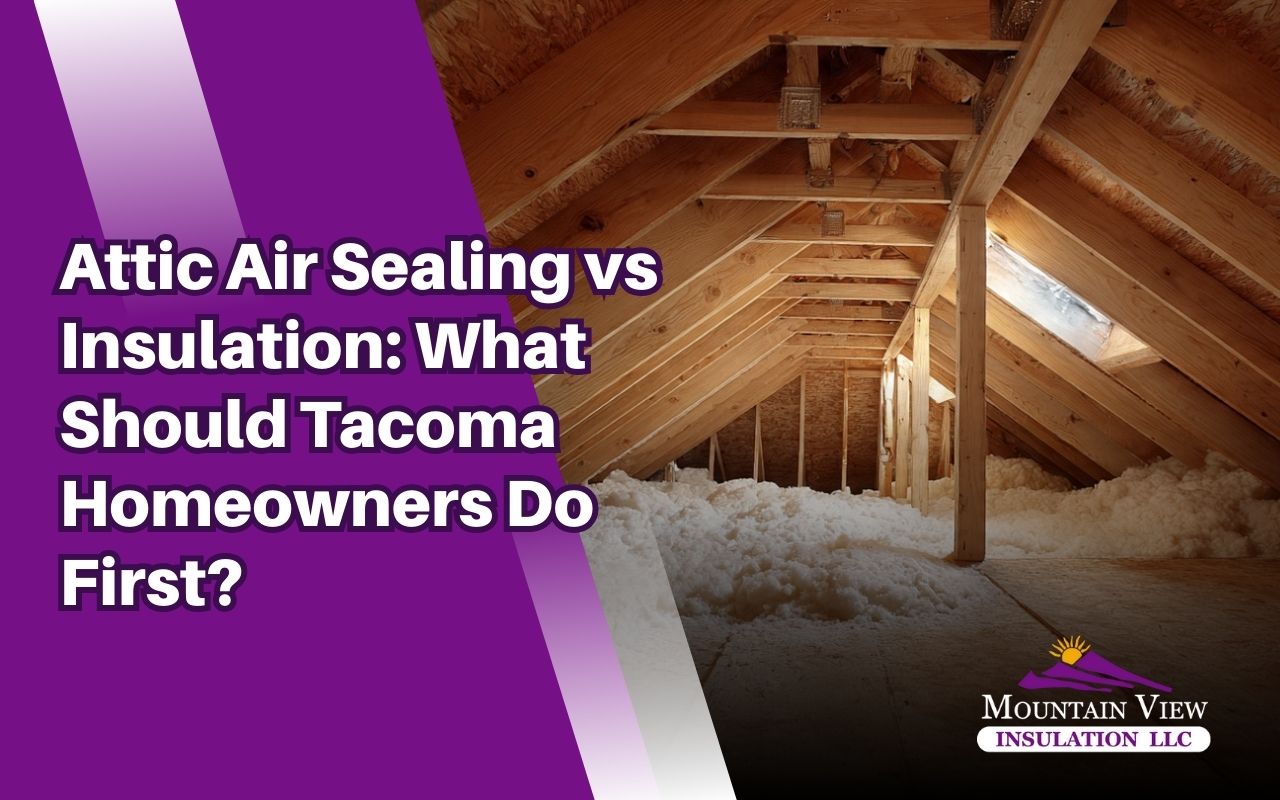
Attic Air Sealing vs Insulation: What Should Tacoma Homeowners Do First? is the big question for many Tacoma families. First, it helps to see how heat and moisture move through your house. In our cool, wet seasons, even small attic leaks can push warm, damp air upward and waste energy.
Instead of rushing to new insulation, it is wiser to look at both steps together. Gaps and cracks often let air move around insulation and weaken it. This guide explains air sealing and insulation, how a blower door test finds attic leaks, and which step usually comes first for comfort and energy savings.
Why order matters in Tacoma’s climate
Tacoma has a marine climate with cool, damp winters and long rainy periods in spring and fall. Warm indoor air naturally rises and tries to escape through the attic. When leaks exist around lights, chases, or the attic hatch, that air carries moisture upward and into colder attic spaces.
As that damp air hits chilly roof surfaces, condensation can form and damage materials. Because insulation alone cannot stop moving air, it may get wet and lose power. Therefore, sealing first limits airflow, reduces heat loss Tacoma homeowners struggle with, and shields insulation from moisture. So Attic Air Sealing vs Insulation: becomes a key question in Tacoma.
What is attic air sealing?
Think of attic air sealing as closing tiny doors between your living space and the attic. These doors are gaps around wiring, plumbing, recessed lights, top plates, and the attic hatch. When warm air rises, it searches for openings. Then it escapes into the attic and carries valuable energy with it.
By sealing these points with caulk, foam, or gaskets, you stop uncontrolled airflow. As a result, comfort improves, drafts shrink, and indoor humidity is easier to manage. In Tacoma, limiting airflow supports moisture control because moist indoor air is less able to reach cold roof surfaces and condense into water.
Good attic air sealing also boosts indoor air quality and long-term energy savings. When leaks are reduced, heating systems run more steadily, not constantly. These air sealing benefits create a solid base so later insulation upgrades can work as designed instead of fighting constant air movement.
What is attic insulation?
Now picture attic insulation as a warm jacket for your home. It slows heat moving between rooms and the attic. Common materials include fiberglass batts, blown-in fiberglass, and cellulose. Each one traps tiny air pockets that resist heat flow and help hold precious warmth inside your Tacoma home.
In the cool seasons, insulation helps your furnace run less while still keeping you comfortable. However, when air leaks are present, warm air can move around or through the insulation and carry moisture with it. That motion lowers real performance, even when the labeled R-value looks strong on paper.
This is why most experts suggest sealing first, then insulating to the recommended level. Over a well-sealed ceiling, insulation performs closer to its rated value. You will notice quieter rooms, steadier temperatures, and fewer drafts. For more local guidance, review these attic insulation tips for Tacoma homes before planning upgrades.
Air sealing benefits vs insulation benefits
It helps to balance the strengths of both steps. Air sealing targets uncontrolled airflow, reduces drafts, stops attic leaks, and cuts the heat loss Tacoma homeowners feel near ceilings. Insulation, on the other hand, limits heat transfer through ceilings and framing. Together they support comfort in every room.
In Tacoma, sealing often gives faster comfort gains because it removes cold spots and blocks wind-driven leaks. Afterward, insulation upgrades lock in those gains and maintain stable indoor temperatures. So Attic Air Sealing vs Insulation is usually answered with “seal first, insulate second.”
Here is a simple way to compare them:
- Air sealing reduces drafts and attic leaks and directly supports moisture control.
- Insulation slows heat transfer and helps rooms stay warm longer after the system shuts off.
- Both together provide deeper energy savings than either step alone.
Finding attic leaks with a blower door test
A blower door test helps measure and locate hidden leaks. A technician places a powerful fan in an exterior doorway and gently depressurizes your home. As indoor air rushes through leaks, they use smoke pencils, infrared cameras, or even a hand to feel where uncomfortable drafts appear.
Typical attic leak points include the attic hatch, recessed lights, duct chases, plumbing penetrations, and gaps along top plates. In Tacoma’s damp climate, closing these openings reduces moist air moving into the attic and lowers condensation risk. The blower door test gives a clear starting number for air tightness.
After sealing work, a second test can show how much leakage dropped. Knowing where the biggest leaks are lets you target effort where it matters most. This approach turns an unseen problem into clear, measurable progress toward comfort, safety, and better long-term energy savings.
Moisture control and mold risk
Protecting your home from excess moisture is essential for durability and health. When warm, humid indoor air reaches a cold attic surface, it can turn into tiny droplets. Over time, damp wood and insulation may support mold growth and musty odors that are frustrating and expensive to remove.
In Tacoma, where rain and humidity are common, air sealing becomes a key part of moisture control. By blocking airflow into the attic, you reduce how much moist air reaches cold roof sheathing. Proper attic ventilation also matters, because it lets small amounts of remaining moisture escape safely outside.
After sealing the ceiling plane, confirm bath fans vent outdoors and that kitchen vents also reach the exterior. Then upgraded insulation stays drier and performs better. This two-step method supports healthier indoor air, a stronger roof structure, and fewer moisture surprises after storms or chilly nights.
Heat loss in Tacoma homes: common paths
Understanding how heat escapes helps you choose the right fix. In many Tacoma homes, heat loss occurs through ceiling penetrations, leaky ductwork, and disturbed insulation. Recessed lights, attic hatches, and plumbing penetrations often allow attic leaks that waste energy and let moisture ride into the attic space.
Common paths for heat loss Tacoma homeowners should watch include:
- Gaps and cracks around recessed lights, chases, and the attic hatch.
- Leaky ducts running through the attic, especially at joints and seams.
- Thin, uneven, or compressed insulation that no longer covers the ceiling evenly.
While insulation slows heat transfer, any airflow around or through it reduces real-world performance. Air sealing first closes the worst escape routes so current and future insulation can work as intended. In a cool, wet climate, this order also reduces how much moisture moves with escaping warm air.
Energy savings and comfort gains
Addressing leaks before adding insulation usually delivers both comfort and lower bills. Air sealing reduces drafts so rooms feel less chilly at the same thermostat setting. Once major leaks are under control, fresh insulation keeps heat inside longer and reduces furnace run time on cold Tacoma evenings.
In Tacoma’s damp climate, these steps also limit moist air entering the attic and protect materials from condensation. While exact savings vary by house, many homeowners notice steadier comfort right after sealing work. The attic becomes a calmer thermal space, which supports lasting energy savings year after year.
A blower door test before and after improvements proves the progress you made. When you think about Attic Air Sealing vs Insulation, starts with sealing. Then pair it with the right insulation depth so your home can work as a healthy, efficient system.
DIY or professional help?
Your approach should match your access, safety comfort, and skill. Many sealing tasks, such as weatherstripping the attic hatch or caulking small gaps, are manageable for handy homeowners. However, attics can be cramped, dusty, and filled with hazards like exposed nails, low headroom, and loose electrical wiring.
Features such as recessed lights, chimneys, and flues require specific fire-safe methods. A professional crew brings training, materials, and tools like a blower door and infrared camera. They can uncover hidden attic leaks and seal them safely and efficiently while also checking that existing insulation is installed correctly.
For bigger projects, it often pays to bring in local experts who understand Tacoma’s climate. You can explore attic insulation services in Tacoma to combine air sealing, insulation upgrades, and testing. This support helps ensure your project delivers the comfort and performance you expect.
Frequently Asked Questions
What should I do first in Tacoma, attic air sealing or insulation?
In most Tacoma homes, sealing the attic floor and ceiling penetrations first is the smarter step. This approach limits airflow, improves comfort, and protects future insulation from moisture. After leaks are reduced, adding insulation to the recommended level delivers stronger performance and more dependable comfort across every season.
How can I tell if I have attic leaks?
Common signs of attic leaks include cold drafts, uneven room temperatures, dark insulation stains, and dust streaks around ceiling fixtures. You might also feel air moving near the attic hatch on windy days. For clearer answers, a technician can use testing tools to pinpoint hidden gaps you cannot see.
Is a blower door test really necessary?
A blower door test is not required, but it is extremely helpful. The test measures overall air leakage and highlights hidden problem spots. With this information, you can focus sealing work where it delivers the most benefit. It also lets you compare before and after results to confirm improvements.
How does air sealing help with moisture control?
Air sealing reduces the flow of warm, humid indoor air into the attic. With less moist air reaching cold roof surfaces, there is a lower chance of condensation and mold growth. Combined with proper ventilation and insulation, this strategy keeps materials drier and supports better long-term moisture control.
When should I call a professional instead of doing it myself?
You should call a professional if access is tight, wiring looks unsafe, or you see chimneys, flues, or complex recessed lighting. These details need special methods and materials. A trained crew can safely combine air sealing, insulation, and testing so your project meets comfort and energy goals.
Step-by-step plan: what to do first
A clear sequence makes upgrades easier to plan and budget. Begin with an assessment of your attic and ceiling plane. Look for obvious gaps, missing insulation, staining from past leaks, and any signs of moisture. Then decide which tasks you can handle and which may need professional support.
Most Tacoma homeowners get strong results by following this order:
- Schedule a blower door test to locate major ceiling and attic leaks.
- Seal gaps around the attic hatch, top plates, recessed lights, duct chases, and plumbing penetrations.
- Confirm bath and kitchen fans vent outdoors and that attic ventilation stays clear.
- Evaluate current insulation depth and condition, then add more to reach the recommended level.
- Seal any duct leaks in the attic and verify all access points close tightly.
After these steps, a follow-up test can confirm your improvements. When you weigh Attic Air Sealing vs Insulation, use this order as your guide. For a tailored plan, contact our Tacoma insulation team and schedule a detailed home energy review.